By: Boxer Exteriors • June 15, 2026 • 10 min. read
Estimate Chicago roof replacement costs by square foot, material, pitch, tear-off needs, decking, ventilation, permits, and project complexity.
Table of Contents
- 1. Average Roof Replacement Cost by Square Foot in Chicago
- 2. Roof Replacement Cost by Material
- 3. Roof Replacement Cost Factors Chicago Homeowners Should Not Ignore
- 4. How Roofing Costs Changed Over Time: 1984–2026
- 5. When to Use a Chicago Roofing Contractor for a Final Estimate
- 6. Frequently Asked Questions
A Chicago roof cost calculator can give homeowners a helpful starting point, but it should not be treated as a final quote. It works best as a planning tool, helping homeowners understand a likely price range before scheduling a professional inspection.
The average cost of a new roof in Chicago can vary widely based on roof size, material, slope, tear-off requirements, and installation complexity. A roof replacement cost calculator can help homeowners compare pricing by square foot, material type, and roof condition before requesting a professional estimate.
That range can change because every house has its own shape and history. Roof size, pitch, decking condition, flashing, ventilation, labor, permits, and weather exposure all affect the final price. A steep roof with dormers, valleys, skylights, or chimney flashing usually takes more time and care than a simple gable layout.
There may also be hidden damage beneath old shingles. Soft decking, poor attic airflow, ice dam damage, or storm damage can increase the roof replacement cost in Chicago after the old layer is removed.
Average Roof Replacement Cost by Square Foot in Chicago
A roof replacement cost calculator can make square-foot pricing easier to compare, but the numbers still require context. Roof square footage is not the same as home square footage. Pitch, overhangs, dormers, porches, valleys, and complex roof features can increase the total surface area that needs to be measured, removed, prepared, and covered.
A 2,000-square-foot house may have a larger roofing surface than expected, especially if the structure has a steep slope or multiple sections. Roof pitch also influences labor, safety equipment, removal time, and installation difficulty.
| Roof Square Footage | Estimated Installed Roof Cost |
|---|---|
| 800 sq. ft. | $4,400 – $14,400 |
| 1,000 sq. ft. | $5,500 – $18,000 |
| 1,100 sq. ft. | $6,050 – $19,800 |
| 1,200 sq. ft. | $6,600 – $21,600 |
| 1,300 sq. ft. | $7,150 – $23,400 |
| 1,400 sq. ft. | $7,700 – $25,200 |
| 1,500 sq. ft. | $8,250 – $27,000 |
| 1,750 sq. ft. | $9,625 – $31,500 |
| 2,000 sq. ft. | $11,000 – $36,000 |
| 2,200 sq. ft. | $12,100 – $39,600 |
| 2,500 sq. ft. | $13,750 – $45,000 |
| 3,000 sq. ft. | $16,500 – $54,000 |
Note: These 2026 calculator estimates use a planning range of approximately $5.50 to $18.00 per square foot installed. Actual roof replacement cost can change based on roofing material, roof pitch, tear-off requirements, decking condition, ventilation, flashing, permits, and installation complexity. Premium materials such as slate, cedar shake, designer shingles, and complex metal roofing systems may exceed this range.
Chicago-area homes need durable roofing systems that can handle wind, snow, hail, freeze-thaw cycles, and summer heat. A dependable roof is not only about the visible shingles. Underlayment, attic ventilation, flashing, drip edges, ice and water protection, and installation quality all play a role in long-term performance.
Roof replacement costs across Illinois also vary by local labor, permitting, material availability, and seasonal demand. A roof replacement calculator can provide a useful starting point, but Boxer Exteriors offers complete roof replacement and free inspections for homeowners who want a more accurate Chicago roof replacement cost before making a decision.
Roof Replacement Cost by Material
Roofing material affects both the upfront price and long-term value. The lowest-cost option upfront is not always the best long-term fit, and the most expensive option is not always necessary. The right choice depends on the home’s structure, the neighborhood, the homeowner’s budget, maintenance expectations, and how long the homeowner plans to stay.
| Roof Material | Installed Cost per sq. ft. | Estimated Lifespan | Energy Efficiency | Pros |
|---|---|---|---|---|
| Asphalt Shingles | $4 to $10 | 15–30 years | Moderate | One of the most affordable roofing options for Chicago-area homes. Easy to install, widely available, and offered in many colors and styles. |
| Architectural Shingles | $6 to $12 | 20–35 years | Moderate | Thicker and more dimensional than basic 3-tab shingles. Good balance of curb appeal, durability, and cost for many residential roofs. |
| Metal Roofing | $8 to $18 | 40–70 years | High | Durable, energy-efficient, and resistant to wind, snow, fire, and harsh weather. Reflective finishes can help reduce cooling demand in summer. |
| Slate Roofing | $15 to $30+ | 75–200 years | Low to Moderate | Exceptional longevity, natural stone appearance, strong fire resistance, and very low routine maintenance when installed correctly. |
| Composite Tile | $8 to $15 | 30–50 years | Moderate | Offers the look of slate, shake, or tile with less weight and lower maintenance. A good fit for homeowners who want a premium appearance without the weight of natural stone. |
| Cedar Shake | $6 to $10 | 20–40 years | Moderate | Natural, warm appearance with helpful insulating properties. Works well for homeowners who want a traditional or high-end exterior style. |
Asphalt shingle systems are a common choice for many homeowners because they balance affordability, availability, and reliable performance. Architectural shingles can add depth, texture, and better curb appeal while staying within a mid-range budget.
Metal roofing may make sense for homeowners focused on durability, snow shedding, energy efficiency, and lower long-term maintenance. Cedar shake offers a warm, natural look, but it requires more upkeep and can be harder to maintain in a climate with moisture, snow, and temperature swings.
A Chicago roofing contractor can also help determine whether a home needs repair or full replacement. Some homes only require targeted roof repair or storm damage repair, especially after hail or wind. Others call for complete roof replacement because the system has reached the end of its service life.
A detailed roof replacement calculator can help homeowners compare material options, but a professional estimate should account for the full system, not only the visible material. Tear-off, decking repairs, flashing, ventilation, underlayment, cleanup, warranty coverage, and workmanship all shape the actual investment. This gives homeowners a clearer basis for comparing their options.
Roof Replacement Cost Factors Chicago Homeowners Should Not Ignore
A Chicago roof cost calculator can help homeowners estimate a realistic planning range, but the final number depends on the details found during inspection. The most useful estimate looks beyond surface measurements and accounts for condition, access, safety, and the full system beneath the shingles.
How Roof Pitch Affects Cost
Roof pitch can change the amount of labor needed to complete the job safely. A low-slope section may be easier to access, while a steep roof often requires additional safety equipment, slower movement, and more careful installation. A roof replacement calculator can provide a helpful starting point, but that added time can affect price, especially on taller homes or houses with limited ground access.
Pitch also affects how water, snow, and ice move across the surface. In the Chicago climate, that matters. A solid system has to handle winter buildup, spring storms, and hot summer temperatures without creating weak points around eaves, valleys, or flashing.
How Roof Complexity Affects Cost
Roof complexity includes dormers, valleys, skylights, chimneys, multiple planes, porch sections, and detailed flashing. These features can add curb appeal, but they also require extra labor and materials.
A simple gable layout usually takes less time to measure and install. A roof replacement calculator can give a basic starting point, but a house with several rooflines, deep overhangs, and multiple penetrations takes more time to protect correctly. Each valley, vent, and chimney boot needs careful handling because those areas are common leak points when workmanship is rushed.
Tear-Off, Decking, Ventilation, and Local Requirements
Roof tear-off and disposal costs can also affect the final estimate. Older systems may have worn underlayment, damaged decking, or hidden rot below the existing shingle layer. If soft decking is found, it should be replaced before new materials are installed. Covering a weak base only delays the problem.
A roof replacement calculator can help homeowners plan for common cost factors, but ventilation, ice and water shield, flashing, permit requirements, and local building codes can also influence the final cost. A proper estimate should account for attic airflow, moisture control, and drainage, not just the visible exterior.
Related roofing and exterior services can also affect the total project budget, especially when water damage, ventilation problems, drainage issues, or roof penetrations are involved.
| Type of Service | Average Cost |
|---|---|
| Sheathing replacement | $2.20–$7.00 per sq. ft. |
| Gutter installation | $10–$28 per linear ft. |
| Fascia and soffit repair | $6–$30 per linear ft. |
| Skylight installation | $1,500–$3,500 each |
Chicago roof repair costs are worth comparing before choosing a full replacement. If damage is limited to a small leak, flashing issue, missing shingles, or a storm-related section, roof repair or storm damage repair may be more budget-friendly. If the roof is aged, leaking in several areas, or showing widespread shingle failure, full replacement may provide better long-term value.
How Roofing Costs Changed Over Time: 1984–2026
Roofing has become more expensive between 1984 and 2026 because the job itself has changed. Labor rates, fuel, insurance, disposal fees, building codes, supply chain costs, and roofing material costs have all increased. A roof replacement cost calculator can help homeowners see today’s pricing more clearly, but the roof replacement cost in Chicago also reflects higher expectations for weather resistance, ventilation, and warranty-backed installation.
Older projects were often simpler. Many used fewer system components, lower-cost labor, basic underlayment, and less detailed ventilation planning. Today, a dependable system may include better ice and water protection, improved flashing, upgraded attic airflow, more durable shingles, and thorough cleanup and disposal.
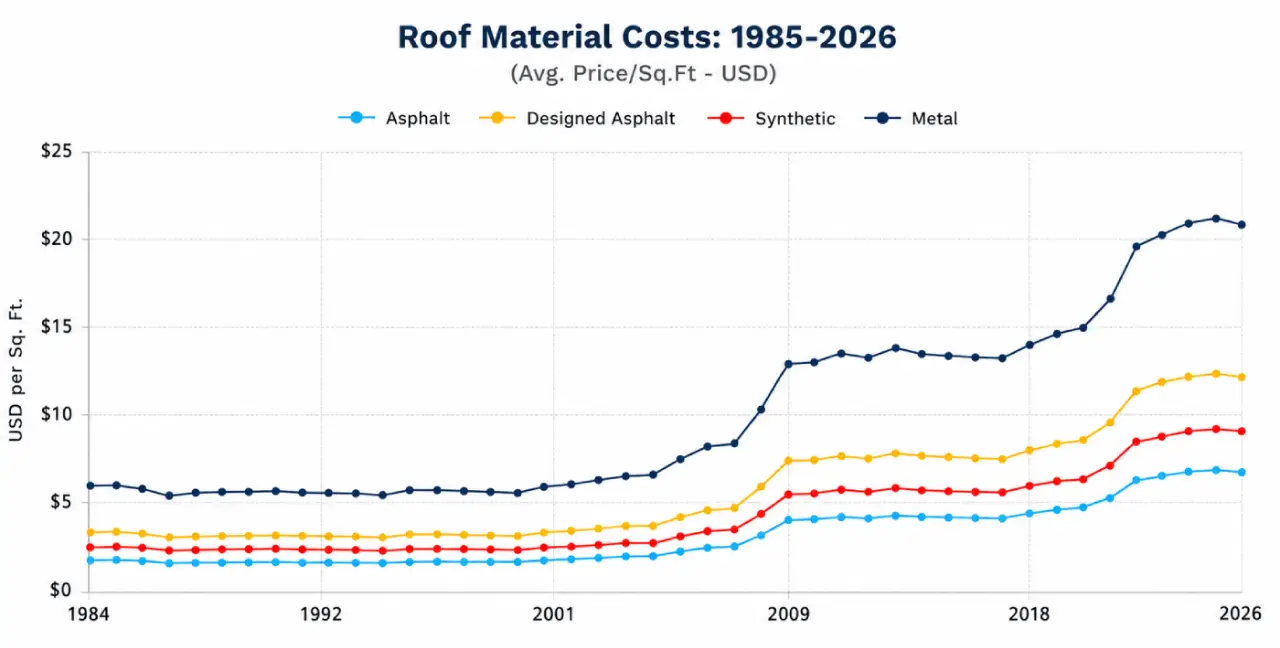
Higher roof replacement costs in Illinois can be frustrating, but they often reflect better materials, stronger installation standards, and longer-term value. A modern system can improve curb appeal, reduce leak risk, support energy efficiency, and hold up more effectively against hail, wind, snow, and freeze-thaw cycles.
When to Use a Chicago Roofing Contractor for a Final Estimate
An online calculator or Chicago roofing cost estimator is useful for early budgeting. A professional inspection is still needed to confirm roof size, slope, decking condition, ventilation, flashing, storm damage, and repair versus replacement options. A professional roof replacement estimate should reflect the actual home, not just a square-foot average.
Boxer Exteriors is based at 130 W Liberty Dr, Suite 200, Wheaton, IL 60187, and serves Wheaton, Glen Ellyn, Naperville, Winfield, Hinsdale, Geneva, St. Charles, Clarendon Hills, Oak Brook, Warrenville, Woodridge, Downers Grove, Yorkville, Batavia, and nearby suburbs.
As a licensed Chicago roofing contractor, we provide complete roof replacement, roof repair, storm damage repair, and siding and fascia installation. Our team also works with gutters and windows, which can be important when leaks, drainage issues, insulation problems, or storm damage affect the broader exterior system, not just the roof.
Homeowners who want a more accurate price can request a free roofing estimate and compare repair, replacement, and exterior upgrade options before committing to the project.
Frequently Asked Questions
How does a roof replacement calculator help homeowners plan a project?
A roof replacement calculator gives homeowners a useful starting point before scheduling an inspection. It can estimate a cost range based on roof area, material, and basic project details. Still, it should not replace a professional review. The total roof replacement cost can change after checking the old roof, decking, flashing, ventilation, and overall roof structure.
Is a roof pricing tool accurate for Chicago-area homes?
A roof pricing tool can be helpful, but it works best as an early planning guide. Homes in the Chicago area face wind, snow, hail, freeze-thaw cycles, and summer heat, which can all affect roof replacement pricing. The final number depends on roof size, slope, material, tear-off needs, and installation complexity. A professional inspection gives a clearer view of the actual replacement cost.
Can siding replacement cost affect the total exterior project budget?
Yes. A roof replacement calculator can help estimate roofing costs, but siding replacement cost can also affect the overall exterior remodeling budget, especially when storm damage, moisture problems, or insulation concerns involve areas beyond the roof. Damaged siding, fascia, soffits, gutters, and windows can all influence how well a home sheds water and holds up over time. For homeowners in Chicago, it often makes sense to review the full exterior system during the same inspection.
What should homeowners know about gutter replacement cost?
Gutter replacement cost depends on linear footage, material, roofline shape, how much drainage the home requires, and whether fascia repairs are also needed. Gutters may seem separate from roofing services, but they play a direct role in moving water away from the roof edge, siding, foundation, and landscaping. Poor drainage can raise the risk of leaks, ice buildup, and exterior damage, which may increase the total cost later.
How is a roofing estimate calculator different from a professional inspection?
A roofing estimate calculator uses general inputs to create a rough cost range. A professional inspection checks the actual roof structure, old roof condition, ventilation, flashing, decking, and storm damage. That deeper review can reveal issues a calculator cannot see. An instant roof estimate is useful for early budgeting, but the final cost to replace a roof should be based on the home’s real condition.
What should a roofing price guide include?
A useful roofing price guide should compare cost by square foot, roofing material, lifespan, energy efficiency, and installation complexity. It should also explain how roof pitch, tear-off, flashing, decking, permits, and ventilation affect the total cost. Homeowners can use this information to compare an asphalt shingle roof, metal roofing, cedar shake, composite tile, and other systems without focusing only on the lowest upfront price.
What is the average new roof cost in Chicago?
The new roof cost in Chicago can vary widely because every home has a different size, slope, layout, and material requirements. A basic asphalt system may fall into a lower cost range, while metal, slate, cedar, or designer shingles usually create a higher cost. New roof installation should also account for tear-off, underlayment, ventilation, flashing, cleanup, warranty coverage, and any hidden decking damage.
Why can roof replacement cost in Chicago vary so much?
Roof replacement cost in Chicago varies because local homes differ in age, roof area, pitch, access, and weather exposure. A simple gable roof is usually easier to install than one with dormers, valleys, skylights, and chimneys. The roofing material and roof design also affect how much labor and material the project requires. If the old roof has soft decking, poor ventilation, or storm damage, the total cost can increase.
Can a roof cost calculator show the final project price?
A roof cost calculator should not be treated as a final quote. It can show a planning range, but the actual cost of roof replacement depends on inspection details. Roof size, tear-off, material, underlayment, flashing, permits, labor, and weather-related damage all influence the final number. Homeowners who want a more reliable number should request a free roofing estimate or schedule an in-person inspection.
When should homeowners compare repair and full replacement?
Homeowners should compare repair and full replacement when damage appears limited. A small leak, missing shingles, flashing issue, or storm-damaged section may not require a full new system. However, widespread shingle failure, repeated leaks, soft decking, or an aging roof often point toward replacement. A detailed inspection helps separate short-term repair savings from the long-term value of a properly installed new roof.