By: Boxer Exteriors • September 14, 2026 • 8 min. read
Compare roof repair and full replacement costs by damage, roof age, decking condition, recurring leaks, repair history, warranties, and remaining service life.
Table of Contents
- 1. Roof Repair vs. Roof Replacement: What Does Each Option Cover?
- 2. The Cost Factors That Change the Repair-or-Replace Decision
- 3. When Do Repeated Roof Repair Costs Stop Making Sense?
- 4. Insurance, Financing, and the Long-Term Value of Replacement
- 5. What the Inspection Reveals About Repair and Replacement
- 6. Frequently Asked Questions
A relatively inexpensive repair may seem appealing when a ceiling stain appears. But another patch on an aging system can leave the homeowner paying for a repair that lasts only until the next storm.
The choice between roof repair and replacement depends partly on how much useful life the existing roof has left. One damaged section surrounded by sound shingles is a reasonable repair candidate. Recurring leaks across several worn areas warrant a replacement estimate.
In Wheaton and the wider Chicago metro area, hail, wind, snow, ice, and temperature swings take their toll. Comparing roof repair and replacement costs starts with assessing the damage, including conditions beneath the surface.
Roof Repair vs. Roof Replacement: What Does Each Option Cover?
A repair fixes the damaged section while leaving the rest in place. Replacement removes the old covering so the crew can inspect the decking and install a new roofing system.
What a Roof Repair Typically Includes
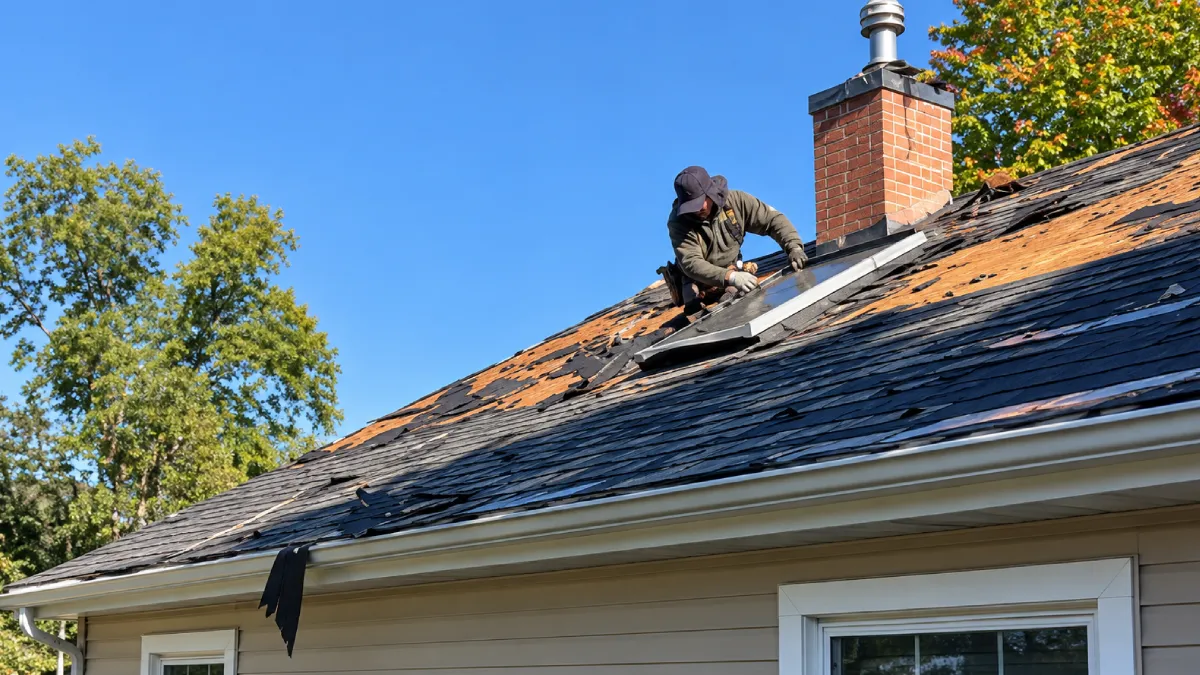
A contractor addresses localized roof damage by replacing a small area of damaged or missing asphalt shingles, repairing flashing at a chimney, wall, or vent, or correcting an isolated flat-roof leak. The work also covers sealing vulnerable penetrations and replacing limited sections of damaged decking.
Published average roof repair costs provide only a starting point. Steep slopes and difficult access add labor, and matching older shingles can take time. If removing the covering reveals rotten decking, that section also needs replacement. Accessing and replacing failed flashing can also expand the job when surrounding shingles are too brittle to lift without cracking.
What a Full Roof Replacement Includes
A full roof replacement starts with removing the old covering and examining the deck. The crew replaces damaged components, installs underlayment and flashing, and lays new asphalt shingles or a flat roofing membrane.
The estimate also accounts for disposal, ventilation corrections, local code requirements, and warranty coverage. Check whether decking repairs are included or billed separately. If tear-off reveals rotten sections outside the quoted scope, replacing them adds to the final bill.
The Cost Factors That Change the Repair-or-Replace Decision
The stain is a clue. It does not pinpoint the leak. Water can follow the framing or travel beneath the roofing before dripping indoors several feet from the point of entry. Patching directly above that mark risks missing the source.
Decking condition is one factor that can change the cost and scope of a roof replacement that can change the scope of the job. Extensive rot adds work that a surface patch cannot address.
| Cost factor | When repair is reasonable | When replacement becomes more practical |
|---|---|---|
| Roof age | Years of service remain, with little surrounding wear. | Widespread wear suggests the covering is nearing the end of its service life. |
| Damage area | One leak or a small area of missing shingles has a traceable cause. | Widespread roof damage affects several slopes. |
| Underlying condition | Decking and insulation are dry beyond the affected section. | Hidden damage may include rotted decking or wet insulation. Signs of structural damage call for a closer examination of the supports. |
| Roofing system | Individual asphalt shingles, isolated flat-roof seams, and localized flashing problems can be repaired with compatible materials. | Shingles break when lifted, or membrane failures extend across the surface. Drainage defects also require correction. |
| Installation complexity | Pitch, height, and access keep a small job manageable. | Repeated setup around complex flashing and numerous penetrations makes multiple repair visits expensive. |
| Exterior connections | The leak comes from an isolated roof intersection that can be repaired without replacing the surrounding roofing materials. | Multiple roof intersections are failing, and the surrounding roofing shows extensive wear. Problems involving gutters, fascia, siding, or windows require separate repairs. |
| Codes and warranties | Compatible material and proper installation meet local requirements and preserve applicable coverage. | Limited work cannot meet applicable requirements or provide the intended warranty protection. |
When Do Repeated Roof Repair Costs Stop Making Sense?
Before paying for another patch, the homeowner can check earlier repair bills for a pattern. Separate storms may have damaged different sections of otherwise sound roofing. A leak that returns in the same worn area suggests that previous repairs provided only a temporary solution.
A few shingles lost in a storm do not justify tearing everything off. If the covering is relatively young, neighboring shingles lift without breaking, and the decking and supports remain dry and solid, a targeted repair may be reasonable. Material compatibility and warranty requirements still apply.
Damage to a flat roof requires an inspection beneath the affected area. If the surrounding membrane remains sound and the insulation is dry, a localized repair may be appropriate.
Recurring leaks in multiple rooms require a closer inspection. Curling or brittle shingles, extensive granule loss, and missing sections on several slopes warrant a replacement estimate. Repeated seam failures on flat roofing, trapped moisture, and deteriorated decking raise similar concerns.
When deciding whether to repair or replace a roof, the homeowner weighs the price of a patch against how long it is likely to last. Spending heavily on another repair is harder to justify when the surrounding covering is worn and leaks keep returning.
The costs can extend beyond the roof itself. Stained ceilings, damaged insulation, emergency visits, disrupted schedules, and repeated cleanup all add to the bill.
Current repair cost + likely future repairs over the remaining service life + related interior damage = the estimated cost of keeping the existing roofing system.
Insurance, Financing, and the Long-Term Value of Replacement
A storm claim does not erase the homeowner’s share of the bill. Roof insurance coverage may pay for sudden wind or hail damage, while deterioration from age, neglected maintenance, or long-term leakage is generally excluded. Coverage, deductibles, exclusions, depreciation, and approved scope vary by policy and claim. Actual cash value settlements subtract depreciation, reducing the amount available to pay for the work.
At Boxer Exteriors, we offer flexible financing to spread the cost of an approved project over time. Monthly payments can make an unexpected roofing expense easier to manage. When comparing options, homeowners should look at the interest rate, repayment period, and total finance charges alongside the monthly payment.
Roof replacement also provides long-term value by correcting underlying problems during installation. Properly installed flashing and repaired decking help protect the home from water intrusion and reduce the risk of recurring leaks. Ventilation improvements may support energy efficiency, although lower bills are not guaranteed.
We install a uniform roofing system for a consistent appearance and back full roof replacements with our 10-year workmanship warranty, in addition to any applicable manufacturer’s material warranties. Keeping the warranty documents and installation records provides a clear account of what was replaced and when for future reference or inspections.
What the Inspection Reveals About Repair and Replacement
Another patch is hard to justify when nobody has established where the water enters. A professional roof inspection starts by locating the point of entry, checking roofing and flashing alongside gutters, siding, fascia, and window connections.
A small opening can let water spread well beyond the entry point. The contractor checks surrounding shingles or the flat roofing membrane to establish how far the deterioration extends. The proposed scope should identify any defects found in the decking, ventilation, flashing, or drainage.
If some concealed areas cannot be accessed, the report identifies what has not been checked and how that limitation affects the estimate. Further investigation is necessary when that uncertainty could change the repair recommendation.
A documented assessment estimates remaining service life and determines whether both repair and replacement quotes are appropriate. The homeowner can then weigh immediate expense against expected years of service, warranty protection, insurance considerations, and long-term value before authorizing work.
We offer free roof inspections in Wheaton and nearby communities, including Glen Ellyn, Naperville, Winfield, Geneva, St. Charles, Oak Brook, Warrenville, Downers Grove, and Batavia. Schedule a visit, and we’ll explain what we find, whether a targeted repair will hold up, and when replacement is worth considering.
Frequently Asked Questions
What is the difference between roof repair and roof replacement?
A repair addresses a specific defect while preserving most of the existing covering. That could mean replacing wind-damaged shingles, rebuilding chimney flashing, or fixing an isolated membrane puncture. Replacing the entire roof involves removing the covering, examining the deck, correcting damaged components, and installing a new system. The estimates should reflect that difference in scope, clearly accounting for disposal, underlayment, flashing, ventilation work, and potential decking repairs.
How does the roof system affect the choice of repair or replacement?
An asphalt shingle roof often allows individual damaged sections to be replaced, provided neighboring shingles can be lifted without breaking and compatible products are available. A metal roof requires an assessment of its specific panels, seams, flashing, and attachment points. Flat roofing brings membrane compatibility and moisture beneath the surface into the decision. Similar signs of leakage can therefore require very different repairs. Each proposal should explain how the repair integrates with the existing roofing system and addresses the water entry point.
Should you replace your roof if it still looks sound?
Appearance alone cannot settle the decision. Shingles can appear to be in good condition from the driveway while moisture damages the decking underneath or flashing leaks around a chimney. Fading, on the other hand, does not automatically justify removal. A roof condition assessment checks for defects, reviews earlier repairs, and estimates remaining service life. If the covering and underlying components are sound, full replacement would remove roofing that still has years of service left.
How can an inspection determine what your roof needs?
A roofing contractor traces the leak before recommending work, checking exterior connections as well as the covering itself. Photographs document affected areas, while an examination of accessible decking, flashing, ventilation, and drainage helps define the scope. If the roof is nearing the end of its expected service life, both repair and replacement estimates may be appropriate. Unchecked areas should be identified rather than assumed sound. Boxer Exteriors offers free inspections in Wheaton and surrounding suburbs to help homeowners compare those options.
Why do roof repair estimates vary among roofing contractors?
Two estimates for the same leak may cover different work. One may cover only a patch, while another includes removing shingles, rebuilding the flashing, and replacing rotted decking. Access affects the price, too. Steep slopes require additional setup, and brittle shingles on an older roof can break during removal, expanding the repair area. Check what each quote includes for cleanup and how unexpected damage will be priced. The cheaper option saves little if water keeps getting in.



Tony and Judy Lavarda, Napervile, IL

The team worked efficiently, stayed responsive to phone calls, and were always professional, friendly, and positive. They came highly recommended and truly delivered. We continue to refer them to our friends and neighbors as well.


I highly recommend Boxer Exteriors


Great customer service. Dawn and her team went above and beyond. I highly recommend!!!!!💪🏻💪🏻