By: Boxer Exteriors • November 2, 2026 • 8 min. read
Summary
A ceiling stain after heavy rain can leave you unsure whether a small patch will solve the problem. Roof repair in Naperville can stay limited to one area when a roofer confirms that the surrounding roofing and the materials beneath it are sound.
The decision depends on where water entered, how far damage has spread, and whether previous repairs addressed the cause. Understanding those findings helps homeowners compare repair estimates, recognize when more extensive work is justified, and decide whether another repair makes sense or replacement deserves consideration.
Key Takeaways
- A patch is enough when damage is localized and a roofer confirms that surrounding roofing, underlayment, and decking are sound.
- A ceiling stain doesn’t pinpoint the leak’s entry point or reveal its extent. Professional assessment must trace the water source and check for hidden damage.
- Repeated leaks or widespread deterioration can justify comparing repair with replacement. Roof age alone doesn’t rule out a localized repair.
- Compare estimates by the identified problem and proposed work. Confirm how hidden decking damage will be priced and approved, and review written warranty exclusions.
- Emergency tarping is temporary. Permanent repairs still require locating the leak and assessing wet insulation or damaged wood.
- Boxer Exteriors’ 10-year workmanship warranty applies to full roof replacements. Coverage for smaller repairs must be confirmed separately.
Table of Contents
A roof leak in Naperville may need a small patch or more extensive repairs. Knowing the difference helps homeowners prevent further damage and avoid unnecessary costs.
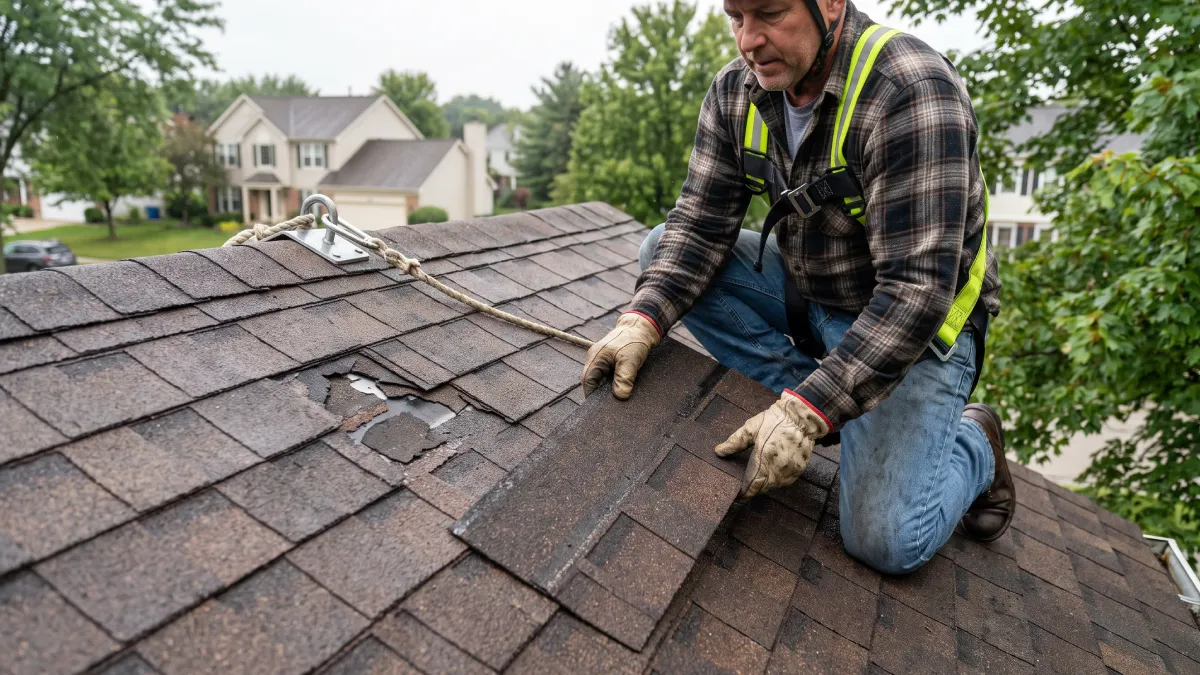
After a night of heavy rain, a homeowner notices a brown stain on the ceiling. From the ground, the roof looks fine. For a Naperville homeowner, the question is whether the leak comes from one damaged area or whether the damage extends beneath the roofing.
How much damage the roofer finds determines the repair. The roofer first finds where the water entered, then checks for damage beneath the roofing before recommending repairs.
When Roof Patching Is Enough
Roof patching is one form of roof repair. It seals a small damaged area to keep water out where the surrounding roof is still in good condition and the materials beneath it are sound. The repair must meet the roofing system’s installation requirements.
For example, strong winds might tear three shingles off an otherwise sound roof in Naperville. If inspection confirms that the underlayment and decking are intact, replacing the damaged shingles limits the repair to that area.
A small puncture in a flat roof membrane is another example. After checking the surrounding material and layers underneath, a roofer could install a compatible patch following the membrane manufacturer’s instructions for preparing and attaching the patch. Two roofing membranes aren’t necessarily compatible just because they look similar.
If loose equipment keeps rubbing against the membrane, the roofer must secure it as part of the work. Otherwise, the movement will continue to wear through the patched area.
Roof Leak Detection Starts With Finding the Entry Point
Finding a roof leak means tracing where the water entered. Moisture can travel along framing or beneath roofing before reaching a ceiling, so the stain below doesn’t pinpoint the opening above. A large stain doesn’t necessarily mean extensive roof damage.
During a roof inspection in Naperville, the roofer checks the shingles or roofing membrane, flashing at walls and chimneys, and openings around vents and pipes. The roofer also checks drainage. Clogged gutters can contribute to water buildup along the eaves, especially when ice dams form. The roofer checks for signs that moisture has reached the decking. On flat roofs, debris around drains blocks runoff and leaves water standing. In accessible attic areas, damp insulation and water tracks help trace the entry point, while stained wood shows where moisture has traveled.
On flat systems, the contractor checks seams, punctures, surface deterioration, and signs that moisture has spread beneath the membrane. If the roofer suspects trapped moisture, they may have to inspect the layers beneath the membrane before deciding what to replace. The surface may look dry even when moisture is trapped underneath.
The inspection also considers nearby siding and windows. Water entering through a wall opening can resemble a roofing problem indoors. Photos and moisture stains help the roofer identify where the water entered.
For example, a Naperville homeowner might notice staining beside a chimney after wind-driven rain. Inspection could reveal failed flashing while the surrounding shingles are still in good condition. In that case, the roofer could repair the flashing without replacing large sections of the roof.
Missing Shingles, Chimney Leaks, and Cracked Pipe Boots
Finding three shingles in the yard after a windy night gives the roofer a good starting point. A ceiling stain near the chimney requires a closer look. The two problems call for different repairs, even if both estimates describe them as patches.
| Damaged Component | What the Roofer Does | What Can Expand the Job |
|---|---|---|
| Torn asphalt shingles | Removes damaged shingles, checks the underlayment and decking, and installs compatible shingles. | Nearby shingles are brittle and break during removal, requiring additional replacements. |
| Damaged or incorrectly installed chimney flashing | Removes surrounding materials for access, inspects the flashing, and rebuilds faulty sections and overlaps. | Rotted decking beneath the flashing must be replaced before the roofer can rebuild the area. |
| Cracked rubber boot around a plumbing vent | Removes the failed boot and installs a new one with its base correctly overlapped by the surrounding shingles. | Water damage to the underlayment or decking around the pipe requires additional repairs. |
When replacing damaged shingles, homeowners sometimes worry about matching the color, especially when the repair is visible from the front of the house. New shingles can stand out against years of weathering, even when the original color is still available. Proper fastening and sealing are more important than a perfect color match because they help keep the shingles secure during strong winds and heavy rain.
An estimate for roof flashing repair or roof pipe boot repair should include the cost of removing and replacing surrounding shingles wherever access requires it.
When Another Patch Stops Being Worth the Money
Deciding between roof repair and replacement becomes harder after several service calls. A homeowner pays to stop a leak in November, then finds another wet ceiling in March. Before paying for another repair, the homeowner should review what was fixed previously and what the roofer found this time.
| Choice | When It Makes Sense | What the Work Includes |
|---|---|---|
| Localized repair | One identifiable failure with sound roofing around it. | A repair limited to the damaged area, generally at the lowest cost. Other parts of the roof remain unchanged. |
| Broader repairs | Damage in several separate areas. | Several problem areas are repaired at once, although the cost may be difficult to justify if the rest of the roof is nearing the end of its lifespan. |
| Replacement | Widespread deterioration or failures across several areas. | Higher upfront costs, but worn roofing materials are removed and the decking can be inspected. |
An older roof doesn’t automatically require replacement. If the surrounding materials are sound, a localized repair may still be a good option.
If inspection reveals a soft strip of decking beside a chimney, roof decking repair involves replacing that wood and rebuilding the layers above it. There’s no reason to replace the decking on other roof slopes if it’s still in good condition.
After a severe storm in Naperville, the roofer documents torn shingles, wind damage, and hail impacts before starting repairs. If the homeowner files an insurance claim, those photographs give the insurer a record of the roof’s condition before repairs begin.
Comparing Roof Repair Estimates in Naperville
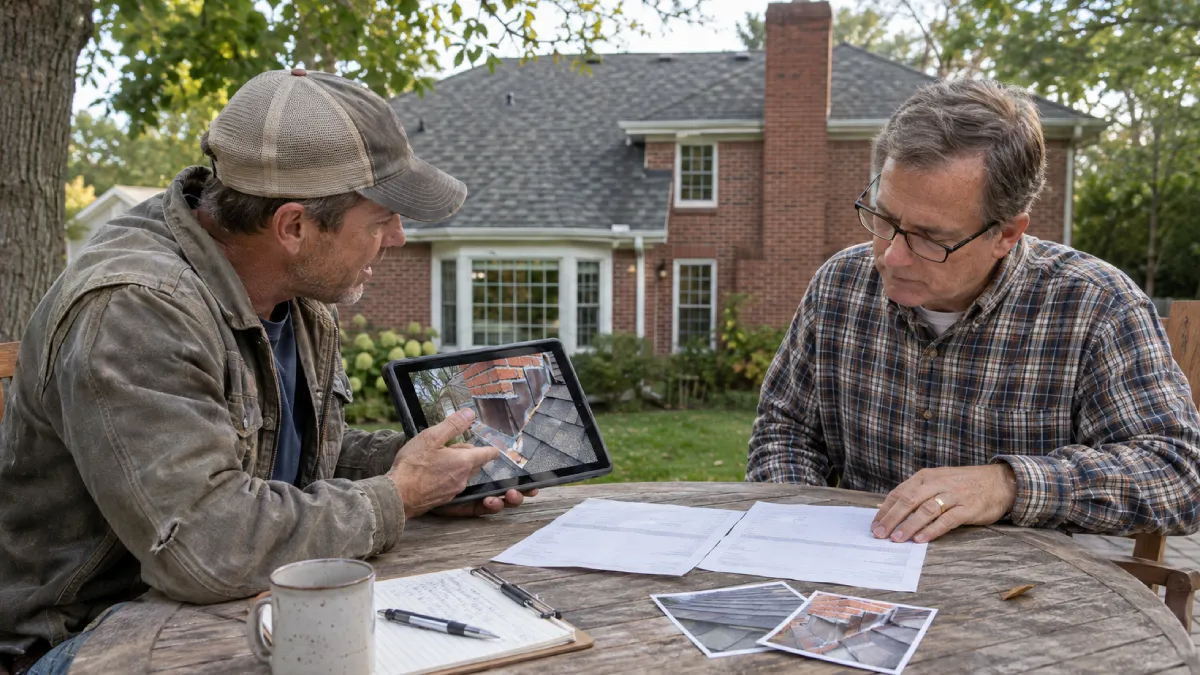
A homeowner receives two estimates for the same roof leak. One contractor plans to seal around the chimney. The other wants to remove shingles and rebuild the flashing. Before comparing prices, the homeowner needs to understand what each contractor found.
The roof repair cost in Naperville also depends on how crews reach the problem. Repairing a steep roof above a two-story entryway takes longer than working on a low-pitched garage roof. Material costs and labor time also affect the price. Discovering water-damaged plywood after removing the shingles can increase the cost, too.
Before signing, homeowners should confirm that the estimate covers the following.
- The leak source is identified, preferably with photographs.
- The written estimate identifies which materials will be removed and replaced.
- If crews uncover rotten decking, the estimate explains how they’ll price that work and obtain approval.
- Cleanup includes removing debris and picking up loose nails around the property.
The contractor provides written warranty terms, including exclusions.
The contractor also needs to verify applicable Naperville permit requirements.
Don’t accept an estimate that just says ‘fix leak.’ It should identify the problem and describe the repair.
When comparing roof repair vs. roof replacement, homeowners can use the estimates to see what each option fixes and which aging components will remain. Financing lets homeowners spread the cost of a larger project over time. Comparing the total amount financed, including interest and fees, with the cash price shows the additional cost of financing.
An Active Leak Comes First
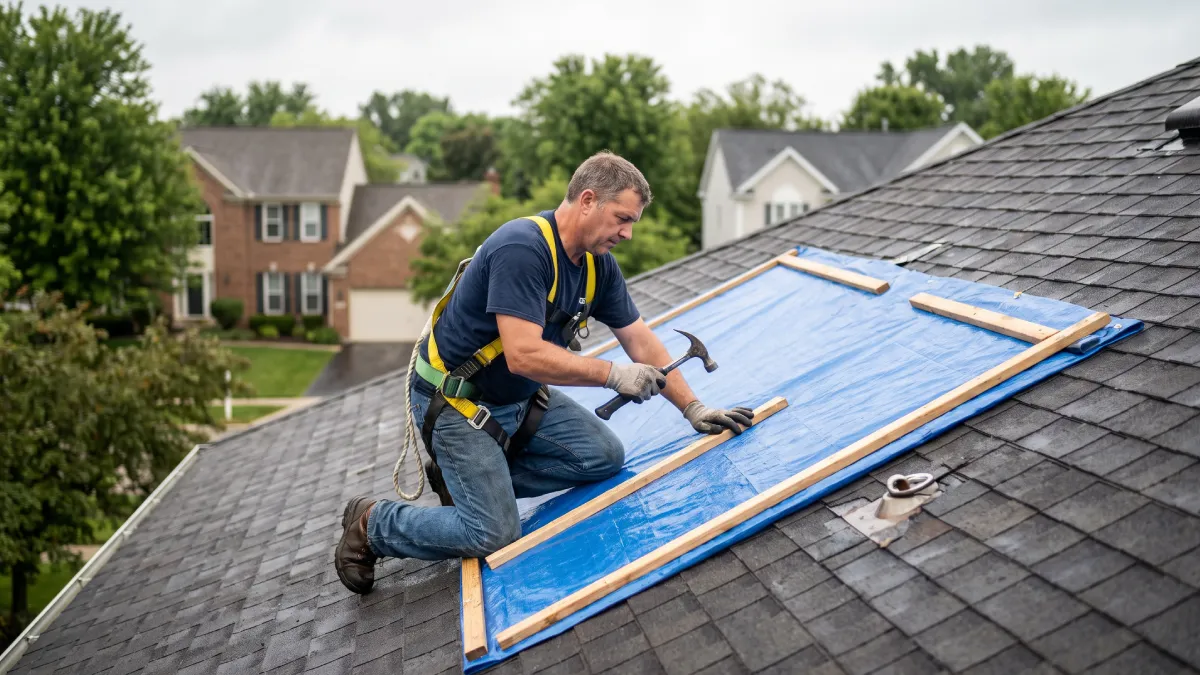
During an emergency roof repair in Naperville, the first priority is to prevent more water from entering the home. A roofer can install a tarp to keep water out until permanent repairs are possible.
The tarp is only a temporary solution. Wind can loosen a tarp, and covering the damaged area doesn’t address wet insulation or damaged wood underneath. The roofer must inspect those materials and locate the leak before determining what permanent repairs are necessary.
Boxer Exteriors is a licensed residential and commercial roofing and exterior contractor based in Wheaton, Illinois. We serve homeowners and businesses in Naperville and throughout the Chicago metro area. We offer free inspections and work on asphalt shingle and flat roofing systems. When homeowners contact us about storm damage, we inspect the affected areas and explain which repairs we recommend.
We also explain what warranty coverage applies to the proposed repair. Our 10-year workmanship warranty applies to full roof replacements, so homeowners shouldn’t assume the same coverage applies to a smaller job.
Once the leak is repaired, homeowners can enroll in our Boxer Roof Care Plan for ongoing preventive maintenance.
To arrange a free roof inspection in Naperville, contact our team. We’ll provide a written estimate outlining the recommended repairs.
Frequently Asked Questions
What should homeowners verify before hiring contractors in Naperville?
Ask for the company’s roofing license number and proof of insurance, then check that the business name matches the estimate and contract. Ask for recent references from customers who had similar repairs, especially if the job involves a flat roof or hard-to-reach chimney flashing. Find out who will supervise the crew and whom to contact if questions come up after the repair. Before signing, find out whom to call if the leak returns.
What roof maintenance records are worth keeping?
Keep a simple folder with inspection reports, dated photographs, and receipts for completed work. Keep track of gutter cleaning and any work that might affect the roof, such as installing a satellite dish or removing a nearby tree. These records help a roofer determine whether a stain is old or related to a new leak. They can also be useful when selling the home. Even a note about when a stain first appeared can help.
Are inspection charges included in repair costs?
Before booking, ask what the inspection includes and whether there’s a fee. Leak testing or removing roofing materials to look for trapped moisture goes beyond a standard visual inspection. Any charge for that work should be explained and approved before it begins. If there’s a separate inspection fee, ask whether it will be credited toward the repair cost. At Boxer Exteriors, we offer free roof inspections and explain any proposed additional investigation before proceeding.
Does a small repair affect the warranty on a new roof?
It depends on the warranty and the type of repair. Before hiring another contractor to work on a recently installed roof, contact the original installer and review the manufacturer’s warranty requirements. Get the proposed work and any required approval in writing. At Boxer Exteriors, our 10-year workmanship warranty applies to full roof replacements. We explain warranty coverage for smaller repairs separately, including what’s covered and whom to contact if a problem occurs.
Should suspected hail damage be inspected if the ceiling is dry?
Yes. A dry ceiling doesn’t show the condition of the exterior materials. If you notice visible damage or have reason to suspect hail damage, schedule an inspection. Ask the roofer to document any damage with photographs and explain what they found. Damage to a neighbor’s house provides context, but it doesn’t establish the condition of another property. Whether the roof requires repairs or replacement depends on its actual condition and how much damage the hail caused.



Tony and Judy Lavarda, Napervile, IL

The team worked efficiently, stayed responsive to phone calls, and were always professional, friendly, and positive. They came highly recommended and truly delivered. We continue to refer them to our friends and neighbors as well.


I highly recommend Boxer Exteriors


Great customer service. Dawn and her team went above and beyond. I highly recommend!!!!!💪🏻💪🏻