By: Boxer Exteriors • October 15, 2026 • 7 min. read
Knowing when to repair or replace a roof can prevent repeated leaks and wasted spending. The right choice depends on damage, roof condition, and repair history.
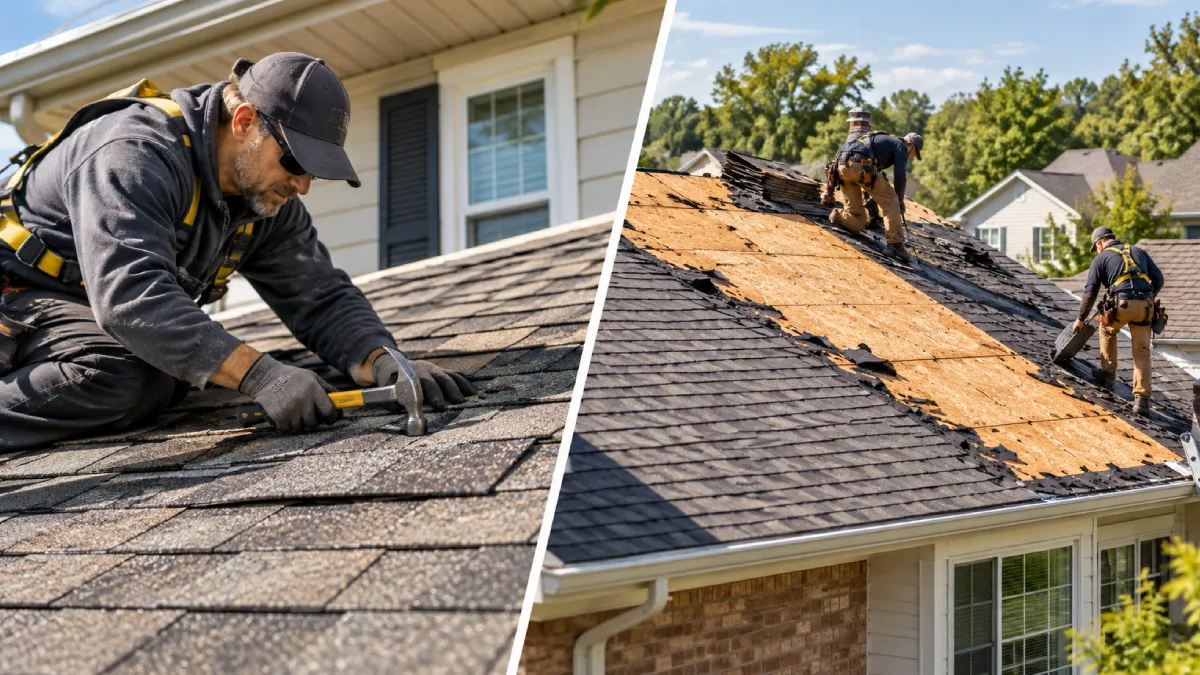
Table of Contents
- 1. Roof Repair vs. Roof Replacement at a Glance
- 2. When Roof Repairs Are Worth Making
- 3. When Patching Stops Being Enough
- 4. Roof Repair Cost vs. Replacement Cost Over Time
- 5. What to Review During a Roof Inspection
- 6. Frequently Asked Questions
A brown ceiling stain after heavy rain doesn’t reveal how much of the roof needs repair. Water can get in around a single cracked pipe boot even when the surrounding shingles are in good shape.
Finding the leak is only part of deciding whether to repair or replace a roof. If the damage is limited to the boot, replacing it may solve the problem. Before recommending that fix, though, the roofer checks for wet decking underneath and damage elsewhere.
Roof Repair vs. Roof Replacement at a Glance
A repair fixes something specific, such as torn shingles or loose flashing. Partial roof replacement covers a larger area, such as a single slope. The tricky part is tying the new work into the old. Materials must be compatible, and the transitions have to stay watertight.
Full replacement strips the roof down to the decking, so crews can find and replace damaged sections before installing the new roof.
| Decision factor | When repair makes sense | Reasons to consider replacement |
|---|---|---|
| Damage extent | One leaking pipe boot or a small damaged area | Deterioration across several slopes |
| Overall condition | Nearby shingles can be lifted without breaking | Shingles are too brittle to lift without breaking |
| Repair history | First leak with an identifiable source | New leaks keep appearing in different spots |
| Long-term value | The rest of the roof still has years of life left | Another patch would only delay replacement |
An older roof is not automatically worn out. Installation quality and years of exposure affect how long it lasts, so age alone doesn’t tell you how much life it has left.
Ice dams, common in Illinois winters, add another complication. If heat escaping into the attic melts snow on the roof and the water refreezes at the eaves, replacing shingles will not stop that cycle. The assessment also has to cover attic air leaks, insulation, and whether the eaves have an ice and water barrier.
When Roof Repairs Are Worth Making
Repairing a few missing or damaged shingles makes sense when the surrounding shingles can be lifted and refastened without breaking. Loose chimney flashing or an open seam on a flat roof can often be repaired without replacing the surrounding roofing, once a roofer confirms the roof covering and the layers beneath it are still sound.
Finding the source takes more than looking directly above a ceiling stain. Water sometimes travels several feet along a rafter before dripping into a room, so a roofer needs to trace the leak back up the slope.
Last year, a Wheaton homeowner contacted us about a ceiling leak. We traced the water back to a split pipe boot, the fitting that seals around a plumbing vent where it passes through the roof.
The decking beneath it was still solid, and the surrounding shingles were intact. That gave us enough sound roofing to work with without removing the entire slope. We recommended replacing the damaged pipe boot and resealing the surrounding flashing.
We tucked the upper edge of the new flashing beneath the shingles above it so rainwater would run over it. We repaired the area around the leak and left the rest of the roof in place.
Replacing One Section
Partial replacement leaves some of the old roofing in place, so it’s worth inspecting the untouched sections closely before committing to the job. Paying less now offers little benefit if the remaining roof sections will need replacement soon afterward.
Matching the shingles takes some care. The original color may still be available, but years of sun exposure will have faded the shingles already on the roof. Shingle size and thickness also affect how well the new section blends with and seals against the old one. Where the new and old sections meet, keeping water out matters more than appearance.
When Patching Stops Being Enough
Cracked shingles on several slopes, curling edges, and large bare patches caused by extensive granule loss suggest the whole roof is wearing out, not just one spot.
Past invoices can reveal a pattern. Three service calls for the same chimney suggest an unresolved flashing problem, while leaks developing in separate rooms over several years give a roofer reason to inspect the whole roof. Another patch might stop today’s drip without addressing the worn sections beside it.
On a flat roof, a surface patch will not dry wet insulation underneath. Widespread splits in the membrane or failing seams may mean tearing off layers until the crew reaches dry, sound material.
A few rotted decking panels can be replaced individually. If rot has reached the rafters, the job will include structural repairs. A sagging roof should be inspected right away.
After an Illinois Storm
Wind damage includes torn shingles and broken seals. After hail, a roofer checks for fractures beneath the granules rather than relying on granule loss alone. Heavy snow adds weight to the structure, while ice dams at the eaves block drainage and allow water to back up beneath the roofing.
On an older Naperville roof, storm repairs could leave a homeowner paying to keep already worn shingles in place. If the inspection also reveals brittle shingles and the homeowner reports past leaks in several rooms, the replacement estimate has to account for that existing deterioration. One torn shingle on a newer installation presents a much smaller job, assuming the surrounding shingles and decking are intact.
Roof Repair Cost vs. Replacement Cost Over Time
Three repairs at $900 each add up to $2,700, but the time between them makes a difference. A homeowner who paid for occasional fixes over several years may still have plenty of life left in the roof. If all three happened in one winter, the roofer needs to explain why the leaks keep coming back before recommending another patch.
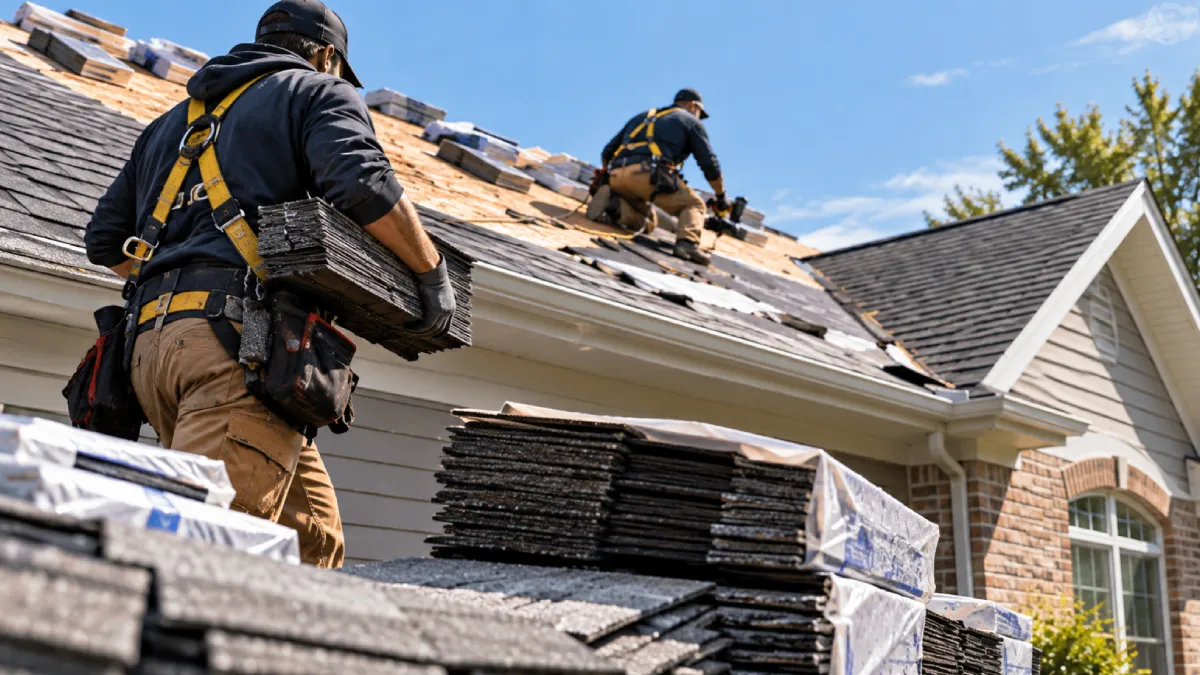
Replacement means a larger bill, tear-off noise, and equipment around the house. Crews also get access to rebuild flashing, replace damaged decking, and correct ventilation or flat-roof drainage problems. The estimate needs to account for roof size, access, and how much decking is included. A low quote with a small allowance can grow once the existing roofing is removed.
Financing makes it possible to pay over time, though interest and fees can raise the final bill. If an estimate also promises lower energy bills, it should specify the work behind that claim, such as sealing attic air leaks or adding insulation. New shingles alone won’t guarantee those savings.
It’s also worth checking who pays if something goes wrong after installation. Manufacturers generally cover specified product defects. At Boxer Exteriors, we offer a 10-year workmanship warranty on full roof replacements for qualifying installation errors, subject to the warranty’s terms. These warranties cover different types of problems.
What to Review During a Roof Inspection
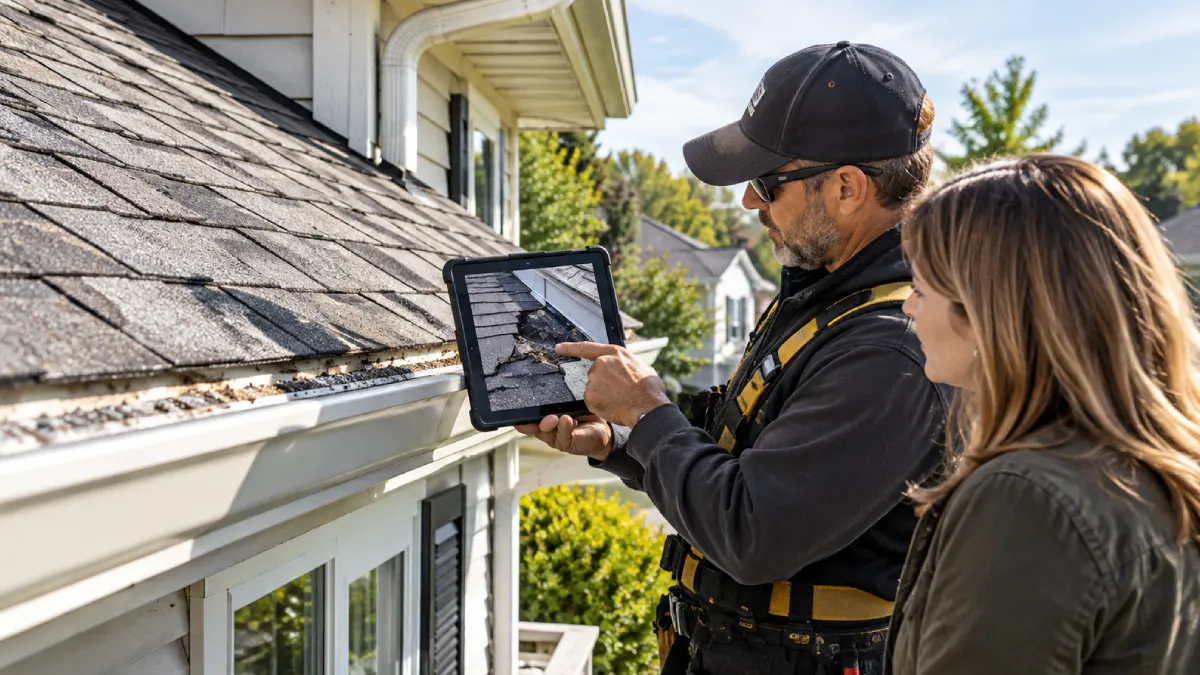
The roofer should show the homeowner photographs of damaged areas, explain where water likely entered, and describe how a proposed repair will connect to the roofing left in place.
A roof replacement estimate needs to spell out the flashing work, any ventilation or drainage corrections, and who will handle local permits and required inspections.
Crews won’t see every rotten decking panel until tear-off. An allowance states how much decking the quoted price includes, while a price per additional sheet of decking lets the homeowner compare added charges with the amount of wood actually replaced.
Roof leaks sometimes require repairs to nearby exterior components. Water spilling behind a gutter, for example, can soak fascia and nearby siding. Repairing those sections may also require fixing the gutter joint or replacing the gutter if corrosion is extensive. Above a window, faulty flashing may be repairable while the window itself remains in good condition.
At Boxer Exteriors, we offer free roof inspections throughout the Chicago suburbs. We’re a licensed contractor based in Wheaton handling asphalt shingle and flat-roof repairs and replacements, plus storm damage restoration. Schedule a roof inspection with us to discuss the work your home requires and learn about ongoing maintenance through our Boxer Roof Care Plan.
Frequently Asked Questions
How can you determine your roof’s age without installation records?
Look through the closing documents, seller disclosures, and warranty paperwork for an installation date. If nothing turns up, ask the previous owner or installing contractor for an invoice. Local permit records are another place to check, but note whether the work covered the whole roof or just one section. Newer repairs and additions can make an aging roof difficult to date by appearance alone. Give the inspector any records you find and distinguish documented dates from estimates.
Can the cost of roof replacement change after work begins?
Yes, particularly when crews uncover conditions they couldn’t inspect beforehand. Before signing, agree on how the contractor will document additional work and obtain approval. Request photographs, a description of the problem, and the added price before nonemergency work proceeds. Also discuss what happens if you’re unavailable when the crew calls. That process gives you control over changes during the roofing project and helps avoid a disputed bill at the end.
Can you stay home while crews repair or replace your roof?
Many homeowners stay home during the work. Hammering and tear-off are noisy, so working elsewhere or arranging pet care may make the workday easier. Before crews arrive, agree on a safe entrance for the family and identify areas that will be off-limits to children and pets. If the roofing project involves interior structural repairs, check which rooms will be unavailable and for how long, especially bedrooms, bathrooms, or spaces used for work.
What should you do if one roofer recommends repair and another says the roof needs replacement?
Start by checking whether both roofers inspected the same areas. Someone who examined the attic may have found roof damage that wasn’t visible from outside. Have each contractor explain the findings that support the recommendation and why the alternative was ruled out. Compare those explanations alongside the proposed work and price. If they still disagree about the same defect, an independent inspector can assess that specific area and explain which findings support repair or replacement.
Does the tear-off cost include hauling away the old roofing?
Check the disposal terms before signing. The contractor may include removal, dumpster rental, hauling, and disposal in one price or list them separately. The estimate should also address cleanup of loose debris and nails around the property. For shingle roofing, ask whether the quoted removal price assumes that the roof has only one layer and how additional layers would be charged. Confirm where the dumpster will sit and when it will be removed, particularly if it blocks your driveway.



Tony and Judy Lavarda, Napervile, IL

The team worked efficiently, stayed responsive to phone calls, and were always professional, friendly, and positive. They came highly recommended and truly delivered. We continue to refer them to our friends and neighbors as well.


I highly recommend Boxer Exteriors


Great customer service. Dawn and her team went above and beyond. I highly recommend!!!!!💪🏻💪🏻