By: Boxer Exteriors • October 18, 2026 • 7 min. read
Roof leaks can start at shingles, flashing, vents, gutters, or ice dams. Knowing the likely source helps Chicagoland homeowners avoid repeated damage and repairs.
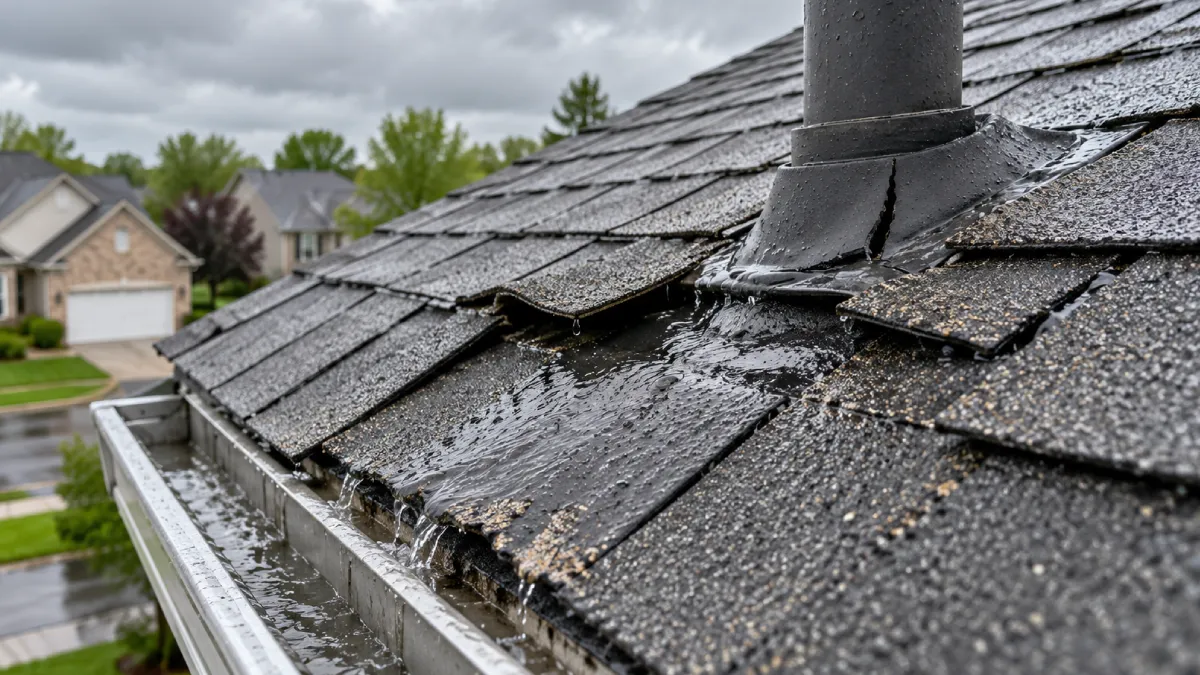
Table of Contents
- 1. Signs of a Roof Leak, Even Without Visible Roof Damage
- 2. Common Causes of Roof Leaks Around Shingles, Flashing, and Openings
- 3. How Chicagoland Weather and Drainage Problems Trigger Leaks
- 4. Attic Condensation vs. Roof Leak: How Inspectors Find the Source
- 5. Matching the Leak Source to the Right Repair
- 6. Frequently Asked Questions
A brown ring appears on the bedroom ceiling after overnight rain. It dries by afternoon, only to darken again when snow starts melting off the roof.
A lifted asphalt shingle lets wind-driven rain reach the underlayment. Water also enters where chimney flashing has pulled away or the rubber boot around a vent pipe has split. In winter, ice along the eave traps meltwater until it works beneath the shingles. Damp insulation during a cold spell calls for an attic check, because condensation can wet insulation even when the roof covering is intact.
The indoor stain may be several feet from where water enters. Water follows decking or framing until it finds a place to drip, which explains why an inspector in Wheaton or the surrounding Chicago suburbs will ask about the weather before using the ceiling stain to help trace the leak.
Signs of a Roof Leak, Even Without Visible Roof Damage
A fresh ceiling stain is the clearest sign, though paint sometimes peels before anyone sees a drip. In the attic, damp insulation and a musty smell show where moisture has lingered. A wet patch that keeps returning along an exterior wall also needs investigation.
An old stain reveals less about whether a leak is still active. If its edges have stayed the same through several storms and the surface is dry, it could be a stain from an earlier leak. A mark that grows after rain points to an active problem.
The roof can look intact from the street while a vent seal has split or flashing has pulled away behind a chimney. Those openings are hidden from ground level, as are many joints where roof surfaces meet.
Photographs and weather notes give the inspector a timeline. Homeowners should record whether the area became wet during wind-driven rain, after hours of steady rainfall, or during snowmelt, then check if it dried fully before the next storm. If the damp patch is beside an upstairs window, the inspection should include the window and siding flashing.
Common Causes of Roof Leaks Around Shingles, Flashing, and Openings
A leak often begins where the roof covering ends or meets another surface. During an inspection, the roofer checks those joints and the routes water follows down the roof.
When Shingles Lift or a Valley Holds Debris
On an asphalt shingle roof, each shingle course overlaps the one below to carry rain toward the eaves. A missing shingle exposes the underlayment, while wind-driven rain gets beneath a lifted edge. Before replacing the damaged shingle, the roofer checks the surrounding courses. Brittle shingles can break when lifted to fit and fasten the replacement, turning a single-shingle repair into a larger job.
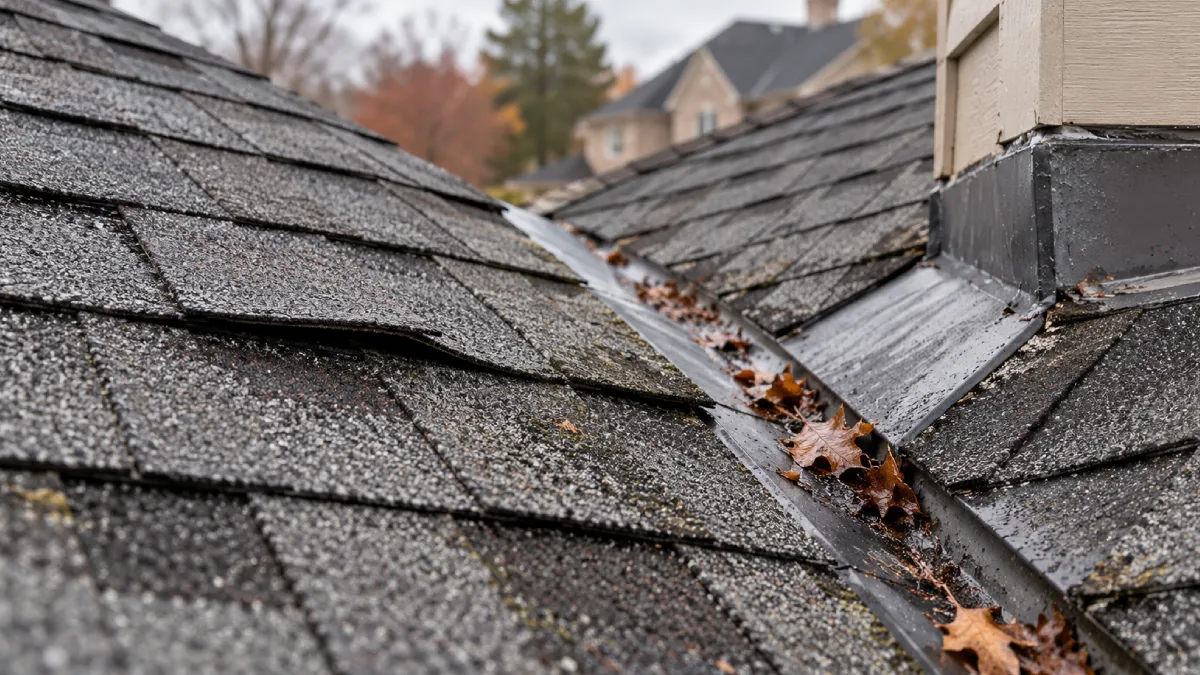
Two slopes drain into a roof valley, concentrating runoff in a narrow channel. Leaves collect there and hide the valley lining. After clearing the debris, the roofer can inspect the valley for tears and open joints.
Chimney Flashing and Wall Joints
Step flashing runs alongside the chimney, with a separate piece woven into each shingle course. Counterflashing covers the upper edges against the masonry. A gap in that assembly sends rain beneath the roof covering, where it follows the deck before appearing on a ceiling several feet away.
The inspection extends up the chimney. Cracked masonry or a failing cap provides another route for rain, so the roofer needs to identify the opening before repairing the joint. Caulk over loose flashing leaves the underlying connection unsecured.
Vents, Pipe Boots, and Skylights
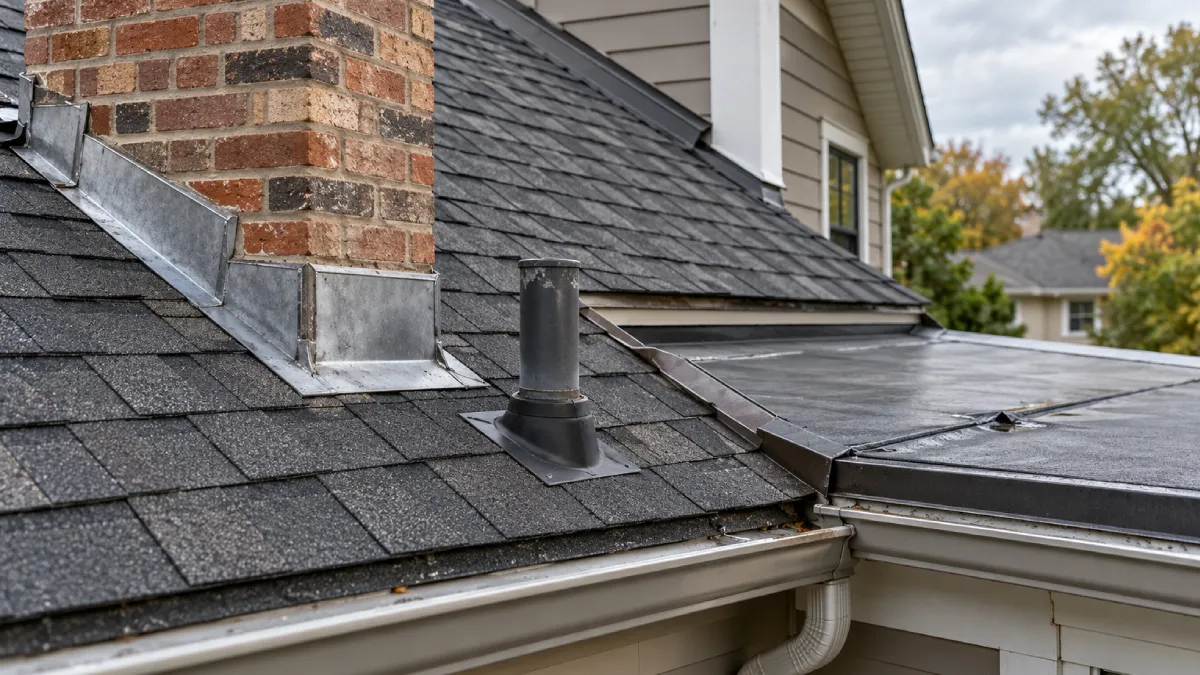
A plumbing vent passes through a pipe boot, whose rubber collar seals against the pipe. Years of sun and temperature swings can split that collar without disturbing the surrounding shingles. During an inspection, staining around the vent helps trace the water path, while the boot’s base shows whether rain is also getting beneath its flashing.
If a stain spreads from the skylight trim after rain, the roofer checks the frame and flashing. On a cold morning, beads of water on the room-facing glass point to condensation. Fog trapped between the panes indicates a failed glass seal. Those findings lead to different repairs, and failed flashing does not automatically require skylight replacement.
Seams and Drains on Flat-Roof Additions
A garage or addition with a flat-roof membrane depends on sealed seams and intact connections around pipes or other penetrations. The roofer also checks the perimeter, particularly where the membrane meets a wall. A small puncture or a seam that has pulled apart gives water a path below the surface.
After rain, an inspector looks at any standing water and checks the drainage path toward the drain or roof edge. The inspector checks both the membrane near the standing water and the seams farther upslope. If the outlet is blocked, the inspection should establish how long water has been sitting there and whether the surrounding materials show water damage.
How Chicagoland Weather and Drainage Problems Trigger Leaks
A chimney joint may stay dry through light rain with little wind, then leak when wind drives rain against the chimney. At the eave, meltwater can meet ice left by an overnight freeze and work beneath the shingles. Knowing the weather conditions when the leak appeared gives the roofer a starting point for the inspection.
After Wind or Hail
A roof can start leaking before a shingle blows off. Wind can break the shingle’s adhesive seal and lift the tab just enough for wind-driven rain to reach the underlayment. The same storm can loosen flashing at exposed joints. After hail, the roofer examines the impact points on the shingles and checks vents and gutters for dents. Granules washed into a downspout are not proof of hail damage on their own.
Ice Dams at the Eaves
During a February thaw in the Chicago suburbs, snow melts on the warmer part of the roof and refreezes at the eave. The ice blocks drainage, and meltwater works beneath the shingles. An inspector should check where heat is escaping into the attic, including air leaks and gaps in insulation, then assess ventilation. Repairing the damaged roofing addresses the immediate water entry. If the heat loss remains, the ice dam can form again.
When Gutters Overflow
When leaves block a gutter, rain overflows and soaks the fascia. During a heavy shower, water may run down the siding or back up at a vulnerable eave. Clearing the leaves restores flow, but the inspection should also check whether the gutter sags and where the downspout discharges.
| Weather pattern | Possible source | Inspection focus |
|---|---|---|
| Wind-driven rain | Lifted roofing or loose flashing | Edges and roof joints |
| Thaw followed by a freeze | Water backed up at the eave | Attic conditions and edge details |
| Heavy rain with overflow | Blocked or damaged gutter | Gutter pitch, fascia, and downspout |
During a thaw, frost melting off the underside of the roof deck can wet attic insulation. The inspector needs to check that possibility alongside water backed up at the eave.
Attic Condensation vs. Roof Leak: How Inspectors Find the Source
After a January thaw, a Wheaton homeowner finds a damp patch on the upstairs ceiling. Snow was melting on the roof that day, but frost in the attic was melting too. Either could have soaked the insulation. Both can happen in the same house.
Rain or meltwater entering through the roofing is a leak. Condensation begins indoors, when moist air reaches cold decking and condenses into water droplets or forms frost. When the moisture appears helps the inspector narrow down the cause:
| Observation | Possible explanation |
|---|---|
| Moisture after rain near a penetration | Exterior water entry |
| Widespread dampness or frost during cold weather | Condensation |
| Moisture during a thaw | Ice-dam leakage or melting attic frost |
Matching the Leak Source to the Right Repair
When we inspect a ceiling stain, we trace the water path before deciding how much roofing work is needed. If it leads to a split pipe boot or a loose flashing joint and the surrounding shingles are sound, we can repair that area. On a flat-roof addition, the same approach applies to an isolated seam defect when the adjacent membrane is in good condition.
When a second stain appears away from the first, patching the original area without tracing both leaks would be guesswork. We trace both water paths and check the decking between them. If the wood is soft or the roofing is failing in several areas, we show the homeowner what we found before discussing replacement.
Sometimes the source is outside the roofing itself. Condensation calls for reducing indoor moisture and air leakage, with insulation and ventilation addressed as appropriate. We also inspect nearby gutters, siding, and window flashing and seals when the water path leads there.
For a leak at the chimney, the estimate should identify the failed flashing and explain how the surrounding shingles will be restored. The condition of the decking becomes clear when that area is opened, so the homeowner needs to know how additional work will be priced and approved. The estimate should also explain who will obtain any required permits and state the warranty terms. Our 10-year workmanship warranty applies to full roof replacements. Coverage for an individual repair is stated separately.
Based in Wheaton, we offer free inspections throughout the Chicago suburbs, including after storms. Once the source of the leak has been addressed, the Boxer Roof Care Plan is an option for homeowners who want scheduled checks.
Frequently Asked Questions
What should I do first if my roof is leaking?
Start by protecting the interior. Move furniture and electronics, set a bucket under the drip, and lay towels down to catch splashes. If the ceiling is sagging, keep people away from the area and arrange emergency help. Photograph the water stains, because your insurer may ask for them, then call a roofing contractor. Stay off a wet or icy roof, since a fall can cause serious injury. Emergency tarping can help keep rain out until repairs are completed.
Can I fix a leak myself with caulk or roof sealant?
Sealant can temporarily seal a small crack, but it rarely solves the problem. Caulk alone does not secure loose flashing or replace a failed component. Flashing that allows water in usually needs to be refastened or replaced, and a split pipe boot has to be swapped out. Damaged shingles need matching replacements that are nailed and sealed correctly. Working on a ladder or sloped roof is also risky, so a professional roof inspection is the safer first step.
Does homeowners insurance cover roof repair after a storm?
Most policies cover damage from sudden events such as wind or hail, but not age-related deterioration or damage caused by neglect. That distinction matters, because insurers want to see storm damage that lines up with a specific event. Report the problem as soon as you notice the roof is leaking, record the date of the storm, and keep receipts for emergency tarping or drying. Ask your roofing contractor for a written inspection report with photos of impact marks or torn shingles. Many Illinois policies also carry a separate wind/hail deductible, so review yours before filing.
How quickly can water damage from a leak lead to mold?
Mold begins growing on damp drywall, insulation, or wood within 24 to 48 hours. A slow, recurring drip from a leaking roof does more harm than one heavy downpour, because the materials never dry out between storms. Soaked fiberglass insulation loses loft and much of its R-value, while persistent moisture softens decking and corrodes fasteners. Look past the ceiling for the first signs of a leak, including a musty closet, blistering paint, or swollen trim along the top of a wall. After roof repair, dry the space thoroughly before patching drywall.
Do roof vents play a role in leaks and ice dams?
They do, in two ways. Leaks around roof vents often start at cracked seals, loose fasteners, or dented metal on box and ridge vents. Ventilation also controls attic temperature. When soffit and ridge vents work together, cold outside air keeps the roof deck cool, so snow doesn’t melt and refreeze at the eave. As a result, ice dams and roof leaks are less common in homes with well-ventilated attics. Insulation piled over soffit openings, or bathroom fans venting into the attic, can restrict airflow or introduce excess moisture.



Tony and Judy Lavarda, Napervile, IL

The team worked efficiently, stayed responsive to phone calls, and were always professional, friendly, and positive. They came highly recommended and truly delivered. We continue to refer them to our friends and neighbors as well.


I highly recommend Boxer Exteriors


Great customer service. Dawn and her team went above and beyond. I highly recommend!!!!!💪🏻💪🏻