By: Boxer Exteriors • November 6, 2026 • 7 min. read
Summary
A ceiling stain spotted during a home showing can leave buyers unsure whether a past leak was repaired or still needs attention. Roof inspections in St. Charles help buyers and sellers assess visible problems, identify needed repairs, and discuss costs before closing.
The decision between a localized repair and replacement depends on the extent of damage and the condition of the surrounding roofing. Clear photographs, repair records, and written findings help both sides evaluate recommendations and negotiate repairs or credits, while inspection limits may leave some questions unresolved until further investigation.
Key Takeaways
- Roof inspections in St. Charles help buyers assess potential roofing expenses and give sellers time to address defects before repair negotiations.
- Gather installation records, repair invoices, and warranty documents before the inspection. These help establish roof history and clarify remaining coverage and transfer conditions.
- Localized repairs may be appropriate when surrounding roofing remains sound. Widespread deterioration or brittle shingles can make repairs impractical; roof age alone does not determine the recommendation.
- Look for dated photographs, documented defects, and clear inspection limits in the report. A visible flashing gap does not, by itself, confirm the source of a ceiling stain.
- Compare repair scopes and concealed-damage allowances before negotiating credits. Schedule inspections before the purchase agreement’s deadline, allowing time for estimates or follow-up visits when snow limits access.
Table of Contents
- What Buyers Should Know Before Closing
- Sellers Can Address Roof Repairs Before Negotiations
- What Contractors Inspect on the Roof and in the Attic
- How the Roof Inspection Process Works
- What Buyers and Sellers Should Look for in the Report
- Roof Repair vs. Replacement Before a Home Sale
- Scheduling a Roof Inspection in St. Charles
- Frequently Asked Questions
Roof problems can complicate a home sale. An inspection in St. Charles helps buyers and sellers identify repairs, estimate costs, and negotiate before closing.
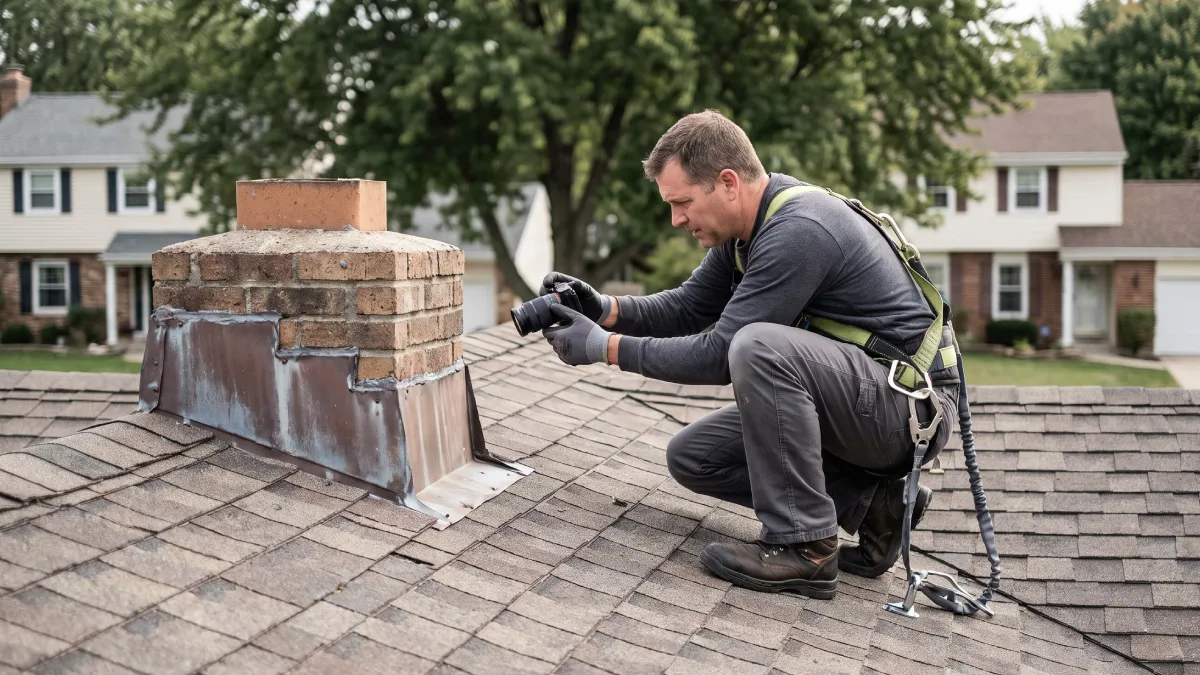
During a home showing, a buyer notices a ceiling stain near the chimney in an otherwise well-maintained house. The seller says the leak was repaired, but there’s no invoice showing what was done.
Before negotiating repairs or a seller credit, the buyer wants to know whether water is still getting in. A roof inspection in St. Charles helps identify the source of the problem and determine what work, if any, is required. A problem limited to one area may be fixed without replacing the entire roof.
What Buyers Should Know Before Closing
Before the inspection, buyers should request records of previous roofing work from the seller. An invoice for chimney flashing replacement shows the contractor what work was done and when.
The contractor then investigates problems identified during the general home inspection and explains the findings, including any recommended repairs.
A pre-purchase roof inspection helps the buyer understand potential roofing expenses and discuss any proposed work with the seller.
Sellers Can Address Roof Repairs Before Negotiations
Replacing two missing shingles before listing, and keeping the repair invoice, gives the seller documentation to show buyers rather than leaving the problem unresolved.
An early inspection gives sellers time to get estimates and arrange repairs before a buyer starts negotiating a repair credit. Installation records help establish the roof’s age. Invoices for previous leak repairs show which areas of the roof have already been worked on, while warranty documents explain the remaining coverage and transfer terms.
What Contractors Inspect on the Roof and in the Attic
The contractor checks asphalt shingles for torn tabs and loose edges. At chimneys and pipe penetrations, the contractor looks for gaps or flashing buried under layers of roofing cement.
The contractor also inspects flat roofs over porches or garages for open seams and standing water near drains.
In the attic, the contractor checks exposed decking for staining and deterioration, then looks for insulation blocking ventilation at the eaves. To trace a leak, the contractor follows water stains along the rafters, looking beyond the visible ceiling stain. Inspecting hidden sections of roof decking may require removing some roofing materials.
The contractor also checks gutters, fascia, and roof edges for drainage problems and visible deterioration.
How the Roof Inspection Process Works
A leak that appears only during wind-driven rain is easy to miss on a dry afternoon. Before the appointment, the homeowner can send photographs taken while water was coming in and explain which room was affected. Knowing when the leak occurred also helps the contractor investigate.
Before the visit, the homeowner clears the space beneath the attic hatch and makes sure rooms with water stains are accessible.
During the visit, the contractor reviews previous roofing records, inspects the roof, and checks any attic or interior areas related to the problem. The contractor documents the findings, discusses them with the homeowner, and explains whether further investigation is necessary.
During winter inspections, snow can hide shingle edges and flashing joints. Icy surfaces restrict safe roof access, so the contractor assesses which areas can be inspected safely. The report identifies uninspected sections and states whether a return visit is required.
What Buyers and Sellers Should Look for in the Report
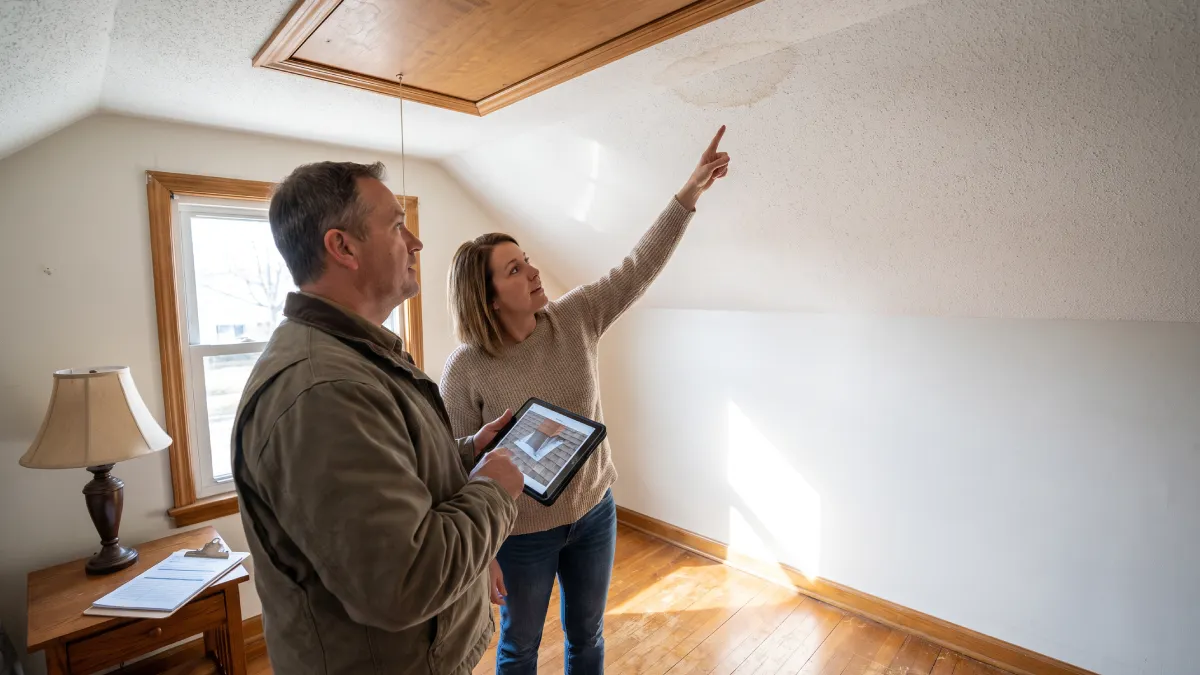
When reviewing a roof inspection report for a home in St. Charles, look for dated photographs showing the location of each defect, including wider shots that put close-up images in context.
This helps another contractor locate the defect when preparing an estimate.
An open flashing joint is a visible defect. Confirming that it caused the ceiling stain requires tracing the path of the water. The report identifies the gap and explains the evidence connecting it to the leak. If that connection remains unclear, the report explains what additional inspection work is required.
Active water entry takes priority over routine maintenance. A blocked gutter requires cleaning. Worn shingles with no active leaks may be worth monitoring rather than replacing immediately. A separate estimate details the proposed repairs and their cost.
An estimate of how much longer the roof may last should account for its visible condition and installation history. Homeowners can use that information to plan for replacement, but no inspection can predict the exact year a roof will fail.
Roof Repair vs. Replacement Before a Home Sale
A repair is a reasonable option when the damage is limited to one area and the surrounding roofing is still in good condition.
Take a chimney leak. Replacing failed flashing could solve it without replacing the whole roof. Applying another layer of sealant over the joint is a temporary fix, not the same as replacing failed flashing, and the estimate should make clear which approach the contractor recommends.
Shingle repairs depend on the condition of the surrounding roof. Replacing two damaged shingles means lifting those above them to reach the nails. If the shingles have become brittle, they can crack during removal, turning a small repair into a larger job. Roof age alone doesn’t show whether the shingles will tolerate that work.
Replacement makes sense when widespread deterioration leaves too little roofing in good condition to support localized repairs. It costs more upfront, so the estimate must identify the affected sections and explain why patching won’t hold up.
On flat roofs, the contractor checks the membrane type and surrounding area before selecting compatible patching material. Wet insulation or damaged decking requires additional work, along with fixing the source of the moisture.
Be cautious of a cheaper estimate that excludes flashing repairs or leaves damaged materials in place. Ask how the completed repair will prevent water intrusion and withstand wind, and have the estimate identify any required permits or inspections.
Manufacturer warranties cover defects in roofing products, while workmanship warranties cover installation errors. Before a sale, the homeowner should check whether each warranty transfers to the next owner and what steps are required to keep the coverage.
Scheduling a Roof Inspection in St. Charles
Schedule the roof inspection well before the deadline specified in the purchase agreement, instead of waiting until the closing date approaches. Booking just two days before that deadline leaves little time to get a second estimate or a follow-up inspection once the snow melts.
At Boxer Exteriors, we offer free roof inspections, as well as roof repairs and replacements in St. Charles for asphalt shingle and flat roofing systems. We’re a licensed roofing and exterior contractor based in Wheaton, Illinois. We provide a 10-year workmanship warranty on full roof replacements.
After purchase, our Boxer Roof Care Plan offers ongoing preventive roof maintenance.
To schedule a free inspection, contact us and let us know your transaction deadline and any concerns already identified. We’ll explain what photographs and written findings you’ll receive, when they’ll be ready, and what repairs we recommend.
Frequently Asked Questions
How do I choose a roofing contractor in St. Charles for a home purchase inspection?
Ask who will perform the residential roof inspection, what access they require, and what findings will be documented in the report. Explain that you’re evaluating a purchase, so you want documented observations and a clear explanation of any recommended work. Request a sample report to see how the contractor presents defects and inspection limits. If repairs are proposed, ask whether the inspection report is available separately from the repair estimate. That makes it easier to compare recommendations.
How can buyers compare a repair credit with roof replacement before closing?
Start by reviewing the written description of the proposed work rather than comparing dollar amounts alone. A credit based on a small repair won’t necessarily reflect the cost of a full roof replacement. Review what each price includes, how concealed damage would be handled, and when the work could begin. Buyers also benefit from knowing who would arrange the project after closing. Use those details when negotiating a repair credit so the amount reflects the proposed work and any potential additional costs.
Can drainage issues affect the entire roofing system?
Drainage problems deserve attention even when the roof covering looks intact. Ask where water travels after leaving each roof section, including whether an upper downspout empties onto a lower roof. Gutters and downspouts belong in that discussion because debris or a poorly positioned downspout outlet can complicate maintenance. Before buying, find out whether correcting the problem involves simple cleaning, an adjustment, or additional roofing work. This helps buyers understand what repairs may be required and how much they could cost.
What if storm damage is discovered shortly before closing?
Keep the inspection photographs and repair estimates together, and share the findings promptly with the people coordinating the transaction. If hail is suspected, ask the inspector to explain what evidence supports that conclusion and what remains uncertain. A roof inspection report that simply labels every mark as hail damage leaves important questions unanswered. If an insurance claim is being considered, retain dated documentation and remember that a repair estimate doesn’t confirm insurance coverage.
How can I compare recommendations from one roofing company with another?
Ask each company to show you the damage behind its recommendation. One contractor may find the surrounding shingles flexible enough for a repair, while another finds them too brittle to lift. The estimates could also cover different work. One might include replacing damaged decking, while the other lists it as an additional expense. Once you understand what each contractor found and included in the estimate, you’re in a better position to compare the quotes.



Tony and Judy Lavarda, Napervile, IL

The team worked efficiently, stayed responsive to phone calls, and were always professional, friendly, and positive. They came highly recommended and truly delivered. We continue to refer them to our friends and neighbors as well.


I highly recommend Boxer Exteriors


Great customer service. Dawn and her team went above and beyond. I highly recommend!!!!!💪🏻💪🏻