By: Boxer Exteriors • October 10, 2026 • 7 min. read
Ice dams can turn normal winter snowmelt into roof leaks and interior damage. Illinois homeowners benefit from knowing the causes, warning signs, and prevention.
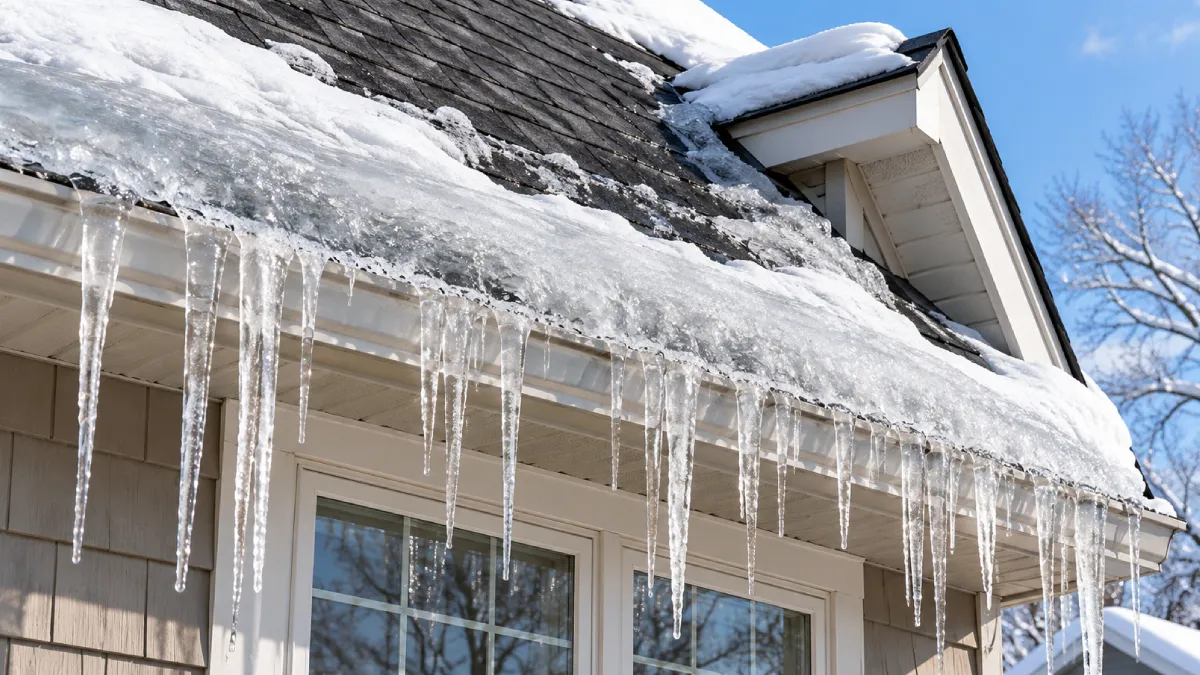
Table of Contents
- 1. How Ice Dams Start on an Illinois Roof
- 2. When an Ice Dam Means More Than Icicles
- 3. Put the Right Repair in the Right Place
- 4. Safe Ice Dam Removal and Immediate Leak Response
- 5. Roof Repair After Ice Dam Damage and Planning for Next Winter
- 6. Frequently Asked Questions
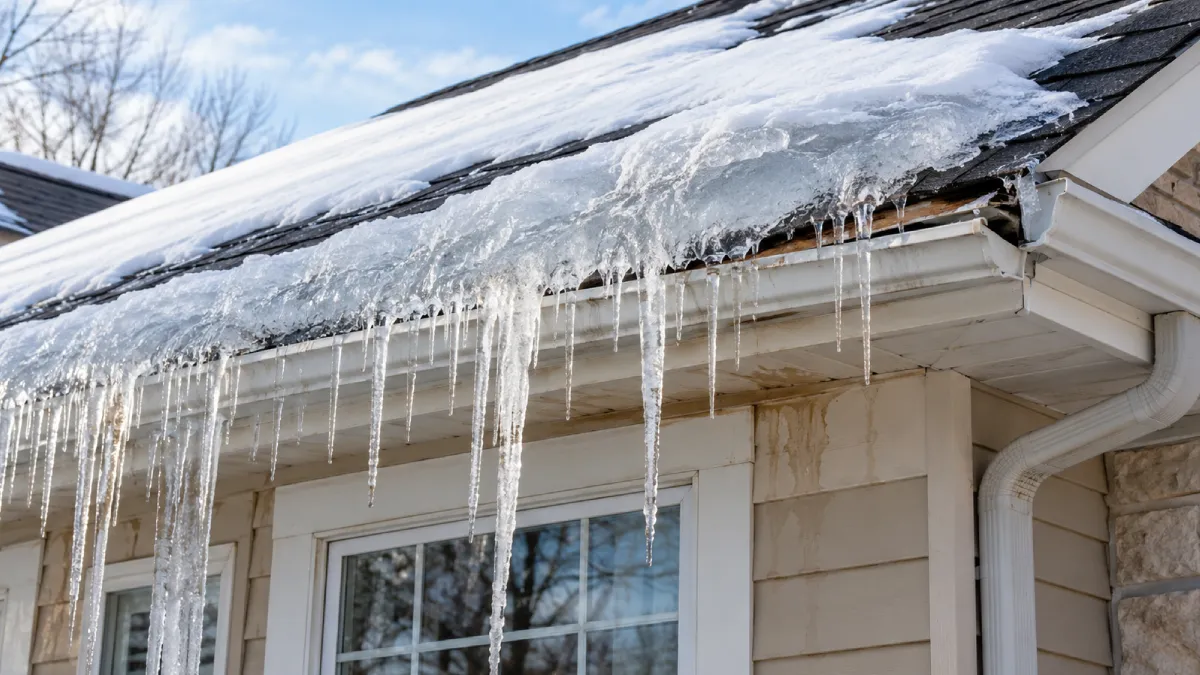
After a January snowstorm, a Wheaton homeowner notices a brown mark spreading beside an upstairs window. Outside, a thick ridge of ice runs along the lower edge of the roof. That ridge is an ice dam. Snow melted on the warmer section higher up the roof, then refroze when the runoff reached the colder eaves. Once the ice blocked drainage, water backed up beneath the shingles or around the flashing.
By the time the stain appears indoors, the visible leak is only the final stage of the problem. An inspection should identify where the water entered and determine why ice formed in that part of the roof. That means looking at attic heat loss, roof geometry, ventilation, roof-edge details, and drainage, rather than focusing only on the damaged area.
How Ice Dams Start on an Illinois Roof
On a shingled roof over heated rooms, the snowpack rarely warms evenly. Heat from below begins melting the snow above the heated section. Meltwater runs down the slope and freezes at the colder edge. Repeated cold nights cause the ridge to grow, even while the air temperature stays below freezing.
Where Attic Heat Enters
Uneven roof temperatures often begin at the ceiling plane. Warm air escapes through a loose attic hatch, gaps around ductwork, or recessed lights. Insulation slows heat transfer through the ceiling, but it won’t seal an opening around a hatch or light.
A house with a sealed hatch and continuous insulation behaves differently from one with recessed lights that leak warm air into the attic. That leakage can warm one section of the roof more than another, causing a thicker ice ridge to form. After the same snowfall, neighboring homes may show very different levels of ice buildup.
Roof geometry adds another variable. A valley gathers snow from two slopes, while a dormer interrupts the roofline and concentrates runoff in a tighter area. If ice keeps forming there, the inspection shouldn’t stop at the gutter. The inspection should trace the heat loss from that section of the roof back into the attic. A flat-roof addition has its own drainage components, so its membrane, transitions, seams, and drains need a separate review.
When an Ice Dam Means More Than Icicles
The most visible sign is not always the best clue. Icicles form on many homes that never develop a leak. The pattern changes when a ceiling stain grows during snowmelt, insulation feels wet, or a gutter pulls away from the fascia. Water may have entered above the stain and traveled through the roof deck before becoming visible.
A roof can suffer ice dam damage while the shingles look intact. Water from an ice dam can follow the same hidden route into the roof deck, insulation, or wall cavity. Once water reaches the framing, it can cause damage to ceilings, walls, and other interior finishes. Flashing failures and attic condensation create similar stains, so the inspection has to follow the water path.
Put the Right Repair in the Right Place
Attic air sealing and insulation work together, but they address different parts of the problem. Sealing closes the openings that let heated air rise. Insulation slows heat transfer after those openings are controlled. Adding insulation over an open bypass does not address the underlying air leak. An attic inspection should check the existing insulation, penetrations, and any wet or compressed material before recommending more work.
Ventilation is often given too much emphasis in discussions about ice dams. It helps a vented assembly manage moisture and keep the deck closer to outdoor temperature. It cannot compensate for major air leakage from the living space. A soffit-and-ridge ventilation system works for some sloped asphalt shingle roofs. Flat and unvented assemblies require a different approach.
At the eave, the goal is to provide backup water protection and maintain reliable drainage. Under IRC R905.1.2, an ice barrier on a roof subject to that provision extends from the lower roof edge to a point at least 24 inches inside the exterior wall line. That coverage is easy to overlook during reroofing when the visible eave extends beyond the wall below it. The installer must also follow the membrane manufacturer’s requirements and local permit rules.
Before winter, clear leaves and sediment from the gutters, check where the downspouts discharge, and repair gutters that sag or slope in the wrong direction. Those steps preserve the drainage route. They do not correct heat escaping into the attic.
| Measure | Where it helps | What the contractor checks |
|---|---|---|
| Air sealing and insulation | Reduces heat reaching the roof | Bypasses, insulation depth, wet material |
| Roof ventilation | Supports a vented assembly | Intake, exhaust, and airflow path |
| Ice barrier | Protects the lower edge | At least 24 inches inside the wall line under IRC R905.1.2 |
| Gutter maintenance | Keeps meltwater moving | Slope, downspouts, fascia, and debris |
Cleaning the gutters restores the drainage path, but it does not address the heat loss that may be causing the ice dam. If the same eave freezes again next winter, the inspection has to extend into the attic and along the roof edge. With ice already blocking drainage, the priority shifts to a safe response and immediate leak control.
Safe Ice Dam Removal and Immediate Leak Response
Once water starts dripping from the ceiling, the priority changes. Start inside the house. Move furniture and electronics away from the leak, place a container under the drip, and photograph the stain. If water is spreading through the ceiling or wall, call a licensed roofer and arrange an inspection.
Don’t climb onto an icy roof to break up the dam. A shovel, open flame, pressure washer, or improvised tool can tear shingles, damage flashing, and send ice sliding toward people below. A roofer should assess the roof surface, access conditions, and required equipment before attempting removal. The right approach varies from house to house.
For example, a blockage above a bedroom may be cleared and the water may stop that afternoon. If the stain returns during the next thaw, the ice blockage was only part of the problem. The roofer then traces the heat loss and examines the roof edge and the roof assembly above the room, including the flashing and underlayment.
Roof Repair After Ice Dam Damage and Planning for Next Winter
Once the snow has melted, a post-thaw inspection starts at the eave and traces the water path toward the interior. On an asphalt shingle roof, it covers the shingles, flashing, underlayment, and decking around the affected area. Gutters and fascia may show where ice or standing water stressed the roof edge. On a flat-roof section, the inspection also covers the membrane, transitions, seams, and drains.
A localized repair is sensible when the damage is limited and the rest of the roof remains sound. Roof replacement may be the better option when several areas are failing, the decking is compromised, or repeated repairs are approaching the cost of a new system. A new roof still needs proper attic air sealing and insulation when heat loss helped form the dam. New shingles alone won’t solve that problem.
Illinois homeowners can schedule a free roof inspection with us. We also provide asphalt shingle and flat-roof repairs and replacements, storm damage restoration, and preventive maintenance throughout Wheaton and nearby Chicagoland communities.
If water is still entering the home, or the same eave freezes every winter, schedule an inspection before the next freeze. We can review the damage and explain which repairs are appropriate for the roof’s condition.
Frequently Asked Questions
What should homeowners do to prevent ice dams?
Effective ice dam prevention starts before the first major snowfall. Homeowners should check attic insulation, seal gaps around the attic hatch and recessed lights, and make sure exhaust vents discharge outdoors. Winter gutter maintenance is also important when leaves or sediment restrict drainage. Cleaning the gutters preserves the drainage route, but it does not correct heat escaping through the ceiling. If the same section freezes every year, the problem warrants an inspection beyond the gutter line.
What happens when an ice dam forms during a cold spell?
When an ice dam forms, heat from the home melts snow higher on the slope. The water runs toward the colder eaves, where it freezes and builds a ridge. Meltwater collects behind the ice instead of reaching the gutter. During a thaw, that water can move beneath shingles or around flashing. Check upper-floor ceilings, window trim, and attic insulation after the weather warms.
How can homeowners document roof damage after an ice dam?
Photograph the ceiling stain, wet drywall, damaged paint, affected belongings, exterior ice buildup, and any visible gutter or fascia problems. Record the date, recent weather, room location, and whether water appeared during snowfall or thawing. This information helps connect the interior damage to conditions on the roof. It also gives a roofing contractor useful context before arriving, especially when the visible stain sits several feet away from the actual entry point.
What should homeowners check after winter damage to the roof?
After the snow clears, check the attic and upper-floor rooms for damp insulation, stained wood, peeling paint, musty odors, and softened drywall. Outside, look for lifted shingles, displaced flashing, loose fascia, bent gutters, and damaged downspouts. A flat-roof addition requires a separate review of its membrane, seams, transitions, and drains. Any signs of moisture warrant further inspection, even when the visible roof surface appears intact.
Does an ice dam always require roof replacement?
No. An ice dam does not automatically mean the roofing system has failed. If water never entered the structure and the shingles, flashing, underlayment, decking, gutters, and fascia remain sound, targeted repairs or attic improvements may be enough. Replacement may make sense when several areas are deteriorating, the decking is compromised, or repeated repairs approach the cost of a new system. The decision should depend on the roof’s actual condition, not the size of the ice ridge alone.



Tony and Judy Lavarda, Napervile, IL

The team worked efficiently, stayed responsive to phone calls, and were always professional, friendly, and positive. They came highly recommended and truly delivered. We continue to refer them to our friends and neighbors as well.


I highly recommend Boxer Exteriors


Great customer service. Dawn and her team went above and beyond. I highly recommend!!!!!💪🏻💪🏻