By: Boxer Exteriors • June 25, 2026 • 9 min. read
See what a new roof may cost in Chicago by size, material, pitch, tear-off, decking, ventilation, permits, and repair vs. replacement needs before scheduling an inspection.
Table of Contents
- 1. Average Roof Replacement Cost in Chicago by Roof Size
- 2. New Roof Cost by Material: Asphalt, Metal, Slate, and Cedar Shake
- 3. What Factors Affect New Roof Cost in Chicago?
- 4. New Roof vs. Roof Repair: When Is Replacement Worth It?
- 5. How to Get a More Accurate Roof Replacement Estimate in the Chicago Area
- 6. Frequently Asked Questions
For a smaller roof with fewer installation challenges, the cost of a new roof in Chicago can start around $5,500 for a smaller asphalt shingle project and increase significantly for larger roofs, complex rooflines, premium materials, or hidden damage. The average cost of a new roof in Chicago depends on size, material, labor, slope, tear-off, decking, ventilation, and local permit requirements.
The cost to replace a roof in Chicago can also change when old shingle layers must be removed or when soft decking is found under the surface. That part is not always visible from the ground.
At Boxer Exteriors, we serve homeowners across the greater Chicago metro area with roofing, siding, gutters, and window services. We are a licensed residential and commercial exterior contractor based in Wheaton, and our work starts with free inspections that help clarify Chicago roofing costs before a full replacement is planned.
Average Roof Replacement Cost in Chicago by Roof Size
Size has a major impact on what homeowners in Chicago should expect to pay for roof replacement. A larger roof area requires additional shingle bundles, underlayment, flashing, removal work, and labor. Bigger projects also take longer to install and can create extra cleanup and disposal work.
One detail can be confusing: house square footage and roof square footage are not the same. A 2,000-square-foot home does not automatically have a 2,000-square-foot roof. Overhangs, slope, garage coverage, porches, dormers, and multiple planes can all increase the measured roof area.
New Roof Cost by Square Foot
For planning, many homeowners look at new roof cost per square foot, but the final number depends on the project conditions. A ranch home with clear access will usually have a lower price than a steep, multi-level home with valleys, dormers, skylights, or storm damage.
In this guide, the ranges are based on installed cost per roof square foot, not house square footage.
| Roof Square Footage | Estimated Installed New Roof Cost in 2026 | Common Project Type |
|---|---|---|
| 800 sq. ft. | $4,400–$14,400 | Garage, small home section, or simple roof area |
| 1,000 sq. ft. | $5,500–$18,000 | Small home, detached garage, or compact roof |
| 1,200 sq. ft. | $6,600–$21,600 | Smaller single-family home or simple ranch layout |
| 1,500 sq. ft. | $8,250–$27,000 | Common smaller suburban home |
| 1,750 sq. ft. | $9,625–$31,500 | Mid-size home with moderate roof area |
| 2,000 sq. ft. | $11,000–$36,000 | Average suburban home in Illinois |
| 2,200 sq. ft. | $12,100–$39,600 | Larger single-family home or home with an attached garage |
| 2,500 sq. ft. | $13,750–$45,000 | Larger home, expanded layout, or multiple roof sections |
| 3,000 sq. ft. | $16,500–$54,000 | Large home, complex roof, or premium material option |
These ranges are useful for early budgeting, not a final new roof estimate. The cost by square foot can shift after inspection if there is decking damage, poor ventilation, old flashing, or other roof system issues that need to be addressed before the new roof is installed.
New Roof Cost by Material: Asphalt, Metal, Slate, and Cedar Shake
The cost of a new roof can vary by material just as much as by size. Asphalt shingles usually fall on the lower end of the price range, while metal, cedar shake, composite, and slate roofing can increase the installed cost because of material price, labor, roof weight, installation complexity, and long-term maintenance.
The table below compares common roofing materials by estimated installed cost, typical lifespan, and best use case. These are broad 2026 planning ranges for Illinois homes, not fixed quotes.
| Roof Material | Estimated Installed Cost per sq. ft. | Estimated Lifespan | Best For |
|---|---|---|---|
| 3-tab asphalt shingles | $4.50–$6.50 | 15–25 years | Basic asphalt roof projects, smaller budgets, simple rooflines |
| Architectural asphalt shingles | $5.50–$8.50 | 20–35 years | Most residential homes, better curb appeal, stronger everyday durability |
| Premium/designer asphalt shingles | $7.00–$12.00 | 25–40 years | Higher-end homes where appearance and shingle performance are priorities |
| Metal roofing | $8.00–$18.00 | 40–70 years | Long-term ownership, weather resistance, reflective roof options |
| Composite roofing | $8.00–$15.00 | 30–50 years | Premium appearance with less weight than natural slate or tile |
| Cedar shake | $6.00–$12.00 | 20–40 years | Traditional homes, natural appearance, high-end exterior style |
| Slate roofing | $15.00–$30.00+ | 75–100+ years | Premium homes, natural stone appearance, long service life |
Asphalt remains a common choice for many homes. The asphalt shingle roof cost is usually lower than premium systems, and it can still give the home a clean, durable, finished appearance. Architectural shingles add more texture and curb appeal, with better durability than a standard three-tab product.
Metal can be a durable long-term option, but the upfront cost of a metal roof in the Chicago area can be significantly higher. It can make sense for homeowners who want long service life, strong wind performance, and a distinct appearance. The trade-off is the higher price and, in some cases, a different sound during rain or hail.
Slate and cedar shake are more specialized options. The cost of slate roof installation is high because the material is premium, heavy, and labor-intensive to install. The home also requires enough structural support for the added weight. The cost of a cedar shake roof can be higher than asphalt as well, with regular maintenance needed to preserve its natural look.
Metal, composite, cedar shake, and slate can make sense when long-term performance, appearance, or a specific exterior style is more important than the lowest upfront price. The right material also depends on roof pitch, structure, ventilation, maintenance expectations, and how long the homeowner plans to stay in the home.
At Boxer Exteriors, material selection for a new roof is about more than appearance. We also look at weight, ventilation, warranty, weather resistance, and how the rest of the exterior system performs. Gutters, fascia, siding, and windows all help move water away from the home, so they can affect how well the new roof system protects the property over time.
What Factors Affect New Roof Cost in Chicago?
Several factors can raise or lower a new roof estimate after inspection. Size gives homeowners a starting point, but roof condition, material choice, access, and installation details often change the final number.
Roof Pitch, Tear-Off, and Decking
Roof pitch plays a major role because it affects safety, access, installation speed, and material handling. A steeper roof usually takes longer to prepare and requires crews to move more carefully across the roof, especially around valleys, chimneys, skylights, and other penetrations.
Roof removal can also affect the final price. If old layers must be removed before the new system can be installed, the project will involve disposal, labor, and additional time. This step is important because covering hidden damage can shorten the life of the new system.
Roof decking replacement is another common variable. Soft, rotted, or water-damaged decking beneath the shingle layer may not be visible until tear-off begins. Once exposed, damaged decking needs to be replaced so the new installation has a stable, flat base.
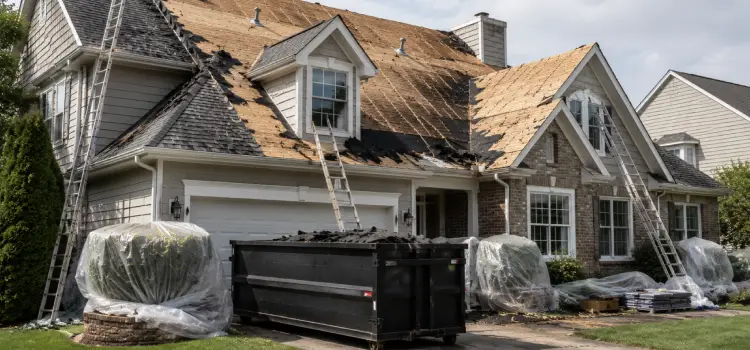
Labor costs are shaped by access, height, roofline complexity, timing, crew size, and weather. A tight lot, busy driveway, large tear-off, or difficult roofline can add time even when the square footage looks modest at first.
Local requirements can also influence the final number. Permit requirements can vary across Chicago and nearby suburbs based on municipality, project scope, and building type. A qualified Chicago roofing contractor should account for permits, code compliance, ventilation, flashing, and cleanup before giving a final estimate.
Storm restoration adds another layer. Hail or wind damage may require photos, documentation, insurance coordination, and a careful inspection of gutters, fascia, siding, and windows. Boxer Exteriors handles roofing repairs, replacements, storm restoration, siding/fascia, gutters, and windows as connected parts of one exterior system.
New Roof vs. Roof Repair: When Is Replacement Worth It?
A repair can make sense when the problem is small, recent, and limited to one part of the roof. Minor leaks, a few missing shingles, localized flashing issues, or a small storm-damage area can often be handled without a full replacement. In that case, the repair should stop water, protect the decking, and extend the life of the current system.
A new roof may become the better option when the same problems keep coming back. An old system with curling shingles, large leaks, soft decking, or repeated storm damage may no longer be dependable enough for another patch. At that point, the cost of roof replacement in Chicago may feel higher upfront, but it can reduce the cycle of repair bills and water issues.
A clear new roof estimate should look beyond the shingle surface. Gutters, siding, fascia, and windows can all affect how water moves away from the home. If runoff is not moving correctly, even a newly installed roof can face extra strain over time. Broader exterior planning helps homeowners understand actual Chicago roofing costs before making the final decision.
| Situation | Repair May Make Sense | New Roof May Make Sense |
|---|---|---|
| Minor leak | Yes, if localized | No, unless leaks repeat |
| Missing shingles | Yes, if limited area | Yes, if widespread |
| Curling shingles | Usually no | Yes, especially on older roofs |
| Soft decking | No | Usually yes |
| Storm damage | Yes, if small area | Yes, if damage covers multiple roof planes |
| Older roof | Maybe, short-term | Often better long-term |
This comparison can help homeowners understand the general direction, but it should not replace a roof inspection. Some roof problems look minor from the ground but become more serious once shingles, flashing, decking, or ventilation are checked closely. A small repair may be enough when the damage is limited, but repeated leaks, widespread shingle wear, or soft decking can make a new roof the more practical long-term choice.
At Boxer Exteriors, we inspect the full exterior system before recommending a repair or new roof installation. That includes the roof surface, flashing, gutters, fascia, siding, ventilation, and visible storm damage, so homeowners can make a clearer decision before committing to a larger project.
How to Get a More Accurate Roof Replacement Estimate in the Chicago Area
The best estimate starts with clear information. Homeowners should be ready to share the roof age, leak history, visible storm damage, insurance claim details, preferred roofing material, budget range, warranty questions, and financing preferences.
A qualified Chicago roofing contractor will also check the parts homeowners cannot easily see from the ground, including flashing, ventilation, decking condition, underlayment, penetrations, and problem areas around chimneys or valleys. These details can change the replacement cost after a Chicago-area roof inspection.
At Boxer Exteriors, we provide free inspections for homeowners considering repairs or new roof installation. We are a licensed residential and commercial exterior contractor based in Wheaton, BBB accredited since 2023, an Owens Corning certified contractor, and backed by 100+ positive Google reviews. Full projects include a 10-year workmanship warranty, and flexible financing is available.
We serve homeowners in Wheaton, Glen Ellyn, Naperville, Winfield, Hinsdale, Geneva, St. Charles, Clarendon Hills, Oak Brook, Warrenville, Woodridge, Downers Grove, Yorkville, and Batavia. If a homeowner is comparing repair, replacement, siding, fascia, gutters, or windows, one careful inspection can help clarify the right next step.
Frequently Asked Questions
What should homeowners know before replacing a roof in Chicago?
Before replacing a roof, homeowners should understand that roof replacement prices in Chicago depend on several factors, including size, pitch, tear-off requirements, decking condition, ventilation, and local code requirements. An inspection is the best starting point because some issues are not visible from the ground. Hidden moisture, soft decking, or old flashing can change the final replacement cost after the existing layers are removed and the replacement plan is finalized.
What affects the cost of replacing an older roof?
The cost of replacing an older roof is shaped by the roof type, the number of existing layers, decking condition, access, and whether the project includes repairs to gutters, fascia, siding, or windows. A professional roof inspection can uncover water damage, weak decking, or poor ventilation before work begins. If the system has repeated leaks or storm damage, the project may cost more than a basic replacement.
When do roof repair costs make more sense than replacement?
Roof repair may make more sense when the issue is small and localized, such as a minor roof leak, a few missing shingles, or damaged flashing near one section. Repair costs are usually easier to manage when the rest of the system is still in good condition. If leaks keep returning, shingles are curling, or decking is soft, replacement may be the more practical long-term choice.
Which roof material has the biggest impact on price?
Material choice can make a major difference in pricing. Asphalt shingles are usually the most budget-friendly option, while architectural shingles add durability and curb appeal. The cost of a metal roof in Chicago is usually higher upfront, but metal can offer strong long-term performance. Slate and cedar shake can also increase the cost of roofing because they require specialized installation, maintenance, and structural considerations.
Is a flat roof priced differently from a pitched roof?
A flat roof can be priced differently because it uses different materials, drainage details, and installation methods than a pitched shingle system. The cost of a flat roof may depend on membrane type, insulation, access, drainage condition, and whether ponding water has caused damage. Flat systems also require careful flashing and edge work, so roofing companies should inspect the entire roof surface before giving a final estimate.