By: Boxer Exteriors • Mar 25, 2026 • 10 min. read
Roof trusses are the engineered skeleton of your roof. Learn the most common truss types and which layouts fit Illinois spans, attics, and vaulted ceilings.
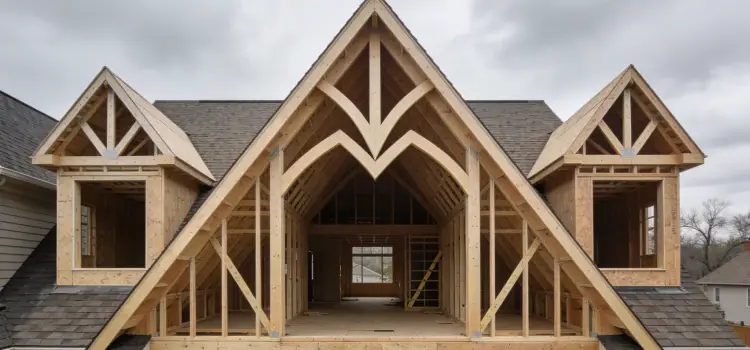
Table of Contents
- 1. What roof trusses are and how they support a roof
- 2. Common residential roof trusses and where they work best
- 3. Commercial and specialty roof trusses for wider spans and unique designs
- 4. How roof truss design affects materials, performance, and long-term durability
- 5. When homeowners should schedule an inspection, repair, or replacement
- 6. The right truss supports the whole roofing system
- 7. Frequently Asked Questions
Roof trusses do far more than hold up a roof. They are the engineered framework that supports the roof structure, helps manage weight, shapes the ceiling below, and affects how a home performs through years of snow, wind, rain, and seasonal change.
That’s important in places like Wheaton and the wider Chicago suburbs, where weather is not gentle for long. A roof system has to deal with winter snow, spring storms, summer heat, and the steady wear that comes with time. Chicago’s building code uses a ground snow load of 25 pounds per square foot as the starting point for roof design, which helps explain why the framing below the surface is so important.
Different types of roof trusses work better for different home designs, layouts, and span requirements. Some are built for simple, dependable residential construction. Others are designed to create extra attic room, support vaulted ceilings, or improve load-bearing capacity across a wider area. The right choice is not just about shape. It is about long-term stability, usable space, and how well the entire system works together.
There is also a practical reason this is important. One industry study found that roofs accounted for about 22% of all building defects, making them the largest single defect category in that analysis. When problems develop overhead, the framing beneath the surface can play an important role in how well the roof performs over time and how serious those issues become.
For homeowners planning a repair, an addition, a full roof installation, or a roof replacement, understanding the basics of roof truss types can make the next decision feel much clearer. This overview is meant to do exactly that.
What Roof Trusses Are and How They Support a Roof
A truss is a pre-engineered framing system made to carry the weight of the roof and transfer that force safely through the walls of the home. In simple terms, it helps with load distribution. Instead of one part of the structure doing all the work, the truss spreads roof loads across connected members so the system stays strong and balanced.
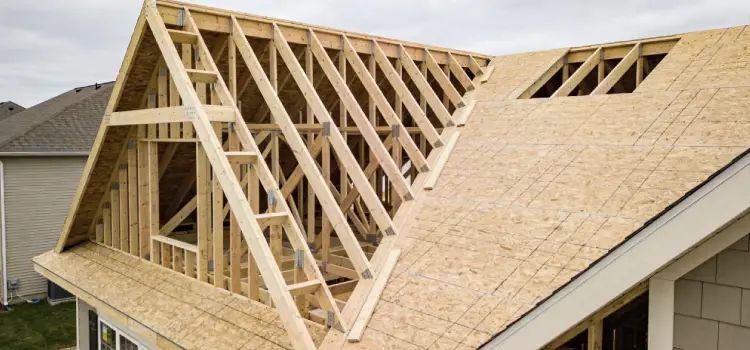
Most homeowners do not need an engineering lesson, but a few truss components are helpful to know. The top chords form the outer slope. The bottom chord creates the lower tie, often at ceiling level. The web members connect everything inside the frame and help support the load across the full span.
Modern homes often use prefabricated roof trusses instead of stick-built rafters. That approach allows for more consistent truss design and off-site truss fabrication, which can improve efficiency during construction. In most homes, wood trusses are the standard choice, while some steel truss types are used for larger spans, heavier demands, or certain commercial applications.
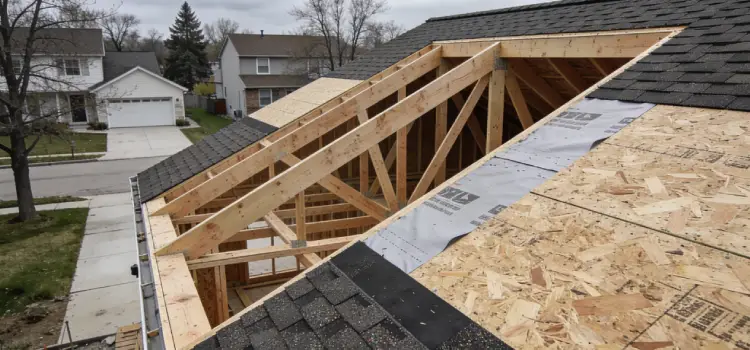
Trusses also influence the materials above them. The framing affects the fit of the roof deck material, the performance of roof shingles, and the overall compatibility of the roofing materials for trusses. In other words, the visible roof only works as well as the structure underneath it.
Common Residential Roof Trusses and Where They Work Best
The best residential roof trusses are not chosen by name alone. The right truss depends on the home’s span, the amount of attic space needed, the ceiling shape below, and the architectural style the house is trying to achieve. In practical terms, one type may be perfect for a simple suburban roofline, while another may be a better fit for a bonus room, a garage addition, or a room with vaulted ceilings.
| Selection lens | Truss type | Works best for | Space effect | Illinois-area note |
|---|---|---|---|---|
| Standard span | King post | Porches, sheds, very small garages, short additions | Flat ceiling, little usable attic room | Fine for simple short-span roofs, but local snow and wind loads still govern |
| Standard span | Queen post | Slightly larger additions and garages | Flat ceiling | Good step up when king post is too limited |
| Standard span | Fink | Typical detached houses | Standard attic volume, not true living space | Best default for ordinary pitched suburban roofs |
| Interior space | Attic or room-in-attic | Storage, bonus rooms, future loft conversion | Creates real usable room | Good when the roof must create square footage as well as carry load |
| Interior space | Scissor | Open-plan living rooms, kitchens, great rooms | Vaults the ceiling across the room | Strong fit when interior volume matters more than attic storage |
| Interior space | Cathedral, raised-tie, or raised-centre vault | Bedrooms or feature rooms needing extra headroom | Adds headroom or a partial vault without a full attic room | Better for targeted visual lift than for maximum storage |
| Roof shape | Gable | Conventional two-sided rooflines | Usually conventional ceiling below | Common and familiar, but mostly a roof-form or end-condition choice rather than a span upgrade |
| Roof shape | Hip or step-down hip | Hipped roofs with uniform eaves | Flat or sloped ceiling depending on layout | Good when the exterior form is a hip roof; step-down hip is the more versatile longer-span option |
| Roof shape | Gambrel | Barn-style homes or projects needing more upper-storey volume | Creates extra headroom upstairs | Useful when interior volume is the goal and the exterior style fits |
| Roof shape | Mono | Porches, lean-tos, sheds, modern additions | Single-slope ceiling | Strong fit for add-ons and contemporary one-slope forms |
| Longer span | Howe or fan | Larger homes, large garages, workshops, light commercial buildings | Usually standard ceiling unless customised | Better once spans move beyond the most basic residential trusses |
| Longer span | Pratt, flat, bowstring, or lattice | Wide-open shops, commercial bays, low-slope roofs, clear-span spaces | Usually utilitarian or low-slope interior geometry | Best treated as specialty systems rather than homeowner-default choices |
| Envelope detail | Raised-heel | Homes where energy performance and attic ventilation are priorities | Similar room shape to a standard truss, but better at the eaves | Especially relevant in colder climates because it protects insulation depth above exterior walls and simplifies ventilation |
Simple and Common Trusses for Standard Homes
For standard residential construction, a few truss styles show up again and again. A king post truss is one of the simplest options and is typically suited to short spans, such as smaller additions, porches, garages, or shed-style structures. A queen post truss extends that idea for a slightly longer span and adds a bit of flexibility without adding too much complexity. A fink truss is one of the most common choices for dwellings because its W-shaped web pattern gives solid support for a standard pitched roof. A triangle truss is even more basic and works well where the roof design is simple and the span is modest. For many homes in Wheaton and nearby suburbs, these truss types fit dependable, cost-conscious roof construction very well.
Trusses That Create Extra Interior Space
Some homeowners want certain roof truss types to do more than just carry the roof.They want it to create usable room below. An attic truss is designed for that job, with an open center that can support real attic space for storage or living use. A scissor truss opens the ceiling line across the full span, while a cathedral truss is often used to vault one portion of a room rather than the entire width. A raised tie truss lifts the bottom chord to create extra headroom without dramatically changing the exterior profile. A monolithic vaulted roof truss takes that idea further by creating a raised center for a brighter, airier interior. These designs can make a room feel taller and less boxed in, but they also require careful ventilation planning. That becomes especially important here because one industry source says moisture is tied to roughly 70% to 75% of building failures, which makes attic and vaulted framing details seem much more significant than they may at first appear.
Trusses Matched to Roof Shape
Other truss choices follow the visible roof shape of the home. A gable truss fits the familiar two-sided roofline seen on many houses. A hip truss supports a hipped roof, where all sides slope down and the form feels a little more sheltered and stable. A gambrel truss creates the classic barn-like profile and can also help create added upper-level room. A mono truss supports a single-slope roof and is often used for porches, sheds, garages, and certain modern additions. In each case, the truss type needs to match both the outside look and the structural demands of the home.
Commercial and Specialty Roof Trusses for Wider Spans and Unique Designs
While most homeowners focus on house roofs, commercial roof trusses become important whenever a building needs broader open areas, fewer interior supports, or a specialized layout. That includes large garages, workshops, mixed-use properties, and some major additions. A 2025 market summary projected the global roof truss market to grow from about $7.5 billion in 2024 to about $13.0 billion by 2034, with demand across residential, commercial, and industrial construction. In these wider-span settings, steel trusses often make sense because they can help handle heavier demands and bolder framing plans.
Truss Types Used for Wider Spans
For wider buildings, the truss design starts to shift. A Howe truss and a Pratt truss are both used to improve load distribution across longer spans, but they do it with different web patterns and force paths. A flat truss is useful where a low-slope roof or broad ceiling line is part of the design. A bowstring truss uses a curved upper profile to open up large interior areas, which is why it has long been associated with big clear-span buildings. A lattice truss uses a denser web arrangement and is a common solution when span and load-bearing capacity take priority over a simple residential layout.
Specialty Trusses for Layout or Design Needs
A fan truss is similar to a fink pattern but uses additional web members to help reach longer spans, so it is often a good fit for larger homes or light commercial construction. A purlin-tie truss is a specialized roof framing approach used where the layout benefits from intermediate support and a custom structural arrangement. For certain building forms, that type can offer a practical balance between span, interior use, and overall roof design.
How Roof Truss Design Affects Materials, Performance, and Long-Term Durability
Roof truss design shapes more than the framing plan on paper. It affects slope, span, ventilation paths, and how the full roof structure performs over time. This is especially relevant in the Chicago area, where snow, wind, summer heat, and repeated storm exposure can slowly test every layer above the house. When the framing is well matched to the home, the system feels solid and dependable. When it is not, small issues can turn into expensive ones.
The framing also helps determine which roofing materials and roof truss types make the most sense. A steeper layout may suit one product better, while a broader span or lower slope may call for a different approach to the roof deck material, underlayment, fastening pattern, and ventilation plan. Even roof shingles depend on proper structural support below them. Owens Corning’s warranty materials make that point in a practical way: many shingles carry limited lifetime coverage, but coverage can shift after certain periods, and workmanship or system protection depends on proper installation and qualified contractors. Owens Corning also notes that shingle fastening must penetrate the wood deck correctly to perform as intended.
That’s one reason roof truss maintenance is still important, even though the trusses are hidden. Homeowners may never see the framing directly, but they can see the signs when performance starts to slip: uneven rooflines, recurring leaks, poor attic airflow, moisture stains, or shingles that do not seem to age evenly. Good design and good maintenance work together. The framing carries the load, but the outer roofing system has to protect it year after year.
When Homeowners Should Schedule an Inspection, Repair, or Replacement
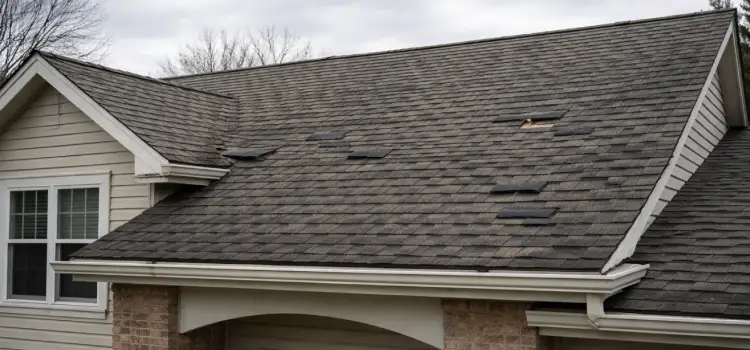
A homeowner does not need to diagnose a truss issue alone. What really counts is knowing when to bring in a professional roof inspection. Warning signs can include sagging lines, ceiling cracks, interior moisture marks, storm damage, missing shingles, or aging materials that no longer look stable. A recent nationwide analysis highlighted how common serious roof problems still are, reporting about 1.9 million U.S. households with sagging roofs and 1.5 million with visible holes.
That’s where a skilled inspection helps. A professional can determine whether the problem is tied to framing, decking, flashing, ventilation, or the surface material itself. From there, the right next step may be targeted roof repair, ongoing maintenance, a full replacement, or a new installation if the structure and materials are both near the end of their service life. Homeowners dealing with sagging lines, storm damage, or aging materials can use a roofing estimate calculator to get a practical starting point before scheduling a full roof evaluation.
For homeowners in Wheaton and nearby suburbs, Boxer Exteriors handles residential roofing, storm restoration, and emergency roof repairs with a practical local approach. The company serves communities across the Chicago suburbs, offers free inspections, backs full roofs with up to a 10-year workmanship warranty, and is an Owens Corning contractor with strong local review history and BBB accreditation.
The Right Truss Supports the Whole Roofing System
The best roof trusses are the ones that match the home’s structure, materials, span needs, and visible roofline. Different types of roof trusses suit different homes and different goals, which is why inspection and planning are so important before major work begins. For homeowners in Wheaton, Naperville, Glen Ellyn, St. Charles, Hinsdale, Downers Grove, and nearby Chicago suburbs, a professional inspection is the clearest next step when planning a new roof or dealing with storm damage or structural concerns.
Frequently Asked Questions
How do you choose the right roof truss for a home in a storm-prone area?
Choosing the right roof truss starts with local conditions, span needs, and the home’s shape. In a place with snow, wind, and seasonal storms, the right truss type should be selected with load demands, moisture control, and long-term service life in mind. The right type of roof truss also needs to work with deck materials, ventilation details, and the rest of the framing plan. A contractor can recommend which types of roof trusses used in the area perform best under those conditions.
How do different truss types affect long-term performance?
Different truss types influence far more than appearance. They affect span capability, airflow, interior room shape, and how evenly weight is carried through the structure. That’s why understanding the different types helps homeowners make better decisions before major work begins. Some layouts are better for attic storage, some fit vaulted spaces, and others suit wider buildings. Because trusses are structural, the wrong match can create long-term problems, while the right one can improve stability, durability, and the overall function of the home.
Are post trusses still useful for residential projects?
Yes, post trusses still have a place, especially for smaller spans and simpler rooflines. King and queen post versions are often used on porches, garages, additions, and other areas where the framing does not need to cover a large open width. This type of truss is used when the goal is dependable support with a simple layout. Although newer systems offer greater variety, post-style framing remains one of the most familiar and commonly used solutions for modest residential construction.
How does the type of roof truss affect attic space and ceilings?
The type of roof truss has a direct effect on how much usable room exists below it. An attic or scissor layout can open up storage or living space, while a raised-tie option can create taller ceilings without fully changing the exterior profile. This is where understanding the different types becomes useful. The right truss type can support better airflow, added headroom, and a more open feel indoors, especially when the design is planned with insulation, ventilation, and long-term performance in mind.
Which roof truss styles are most commonly used in houses?
The styles most commonly used in residential work are usually fink, king post, queen post, and gable configurations. These are among the main types of roof trusses used for standard homes because they are efficient, familiar to builders, and suited to standard spans. A well-planned truss system keeps loads moving safely through the walls below. While wood roof trusses dominate most house construction, some larger projects may use steel roof trusses when spans or loading demands increase.



Tony and Judy Lavarda, Napervile, IL

The team worked efficiently, stayed responsive to phone calls, and were always professional, friendly, and positive. They came highly recommended and truly delivered. We continue to refer them to our friends and neighbors as well.


I highly recommend Boxer Exteriors


Great customer service. Dawn and her team went above and beyond. I highly recommend!!!!!💪🏻💪🏻