By: Boxer Exteriors • Mar 24, 2026 • 10 min. read
A gambrel roof has two slopes per side, shallow on top, steep below, creating extra attic space and classic curb appeal, but it needs careful detailing in Illinois.
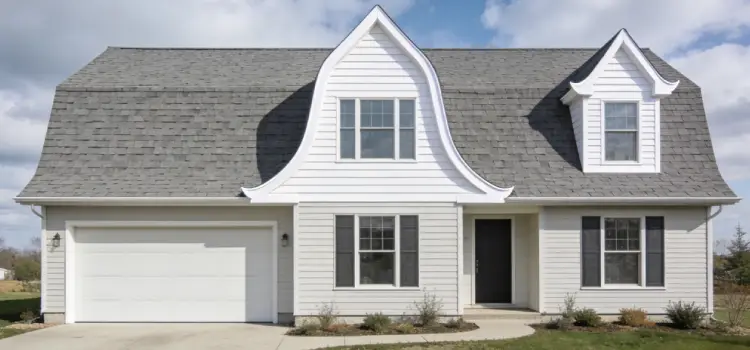
Table of Contents
- 1. Why People Choose Gambrel Roofs
- 2. How Gambrel Roofs Handle Rain, Snow, and Drainage in Illinois
- 3. Gambrel Roof Cost, Construction Complexity, and Material Choices
- 4. Why Gambrel Roofs Offer More Usable Space and Curb Appeal
- 5. Drawbacks and Risk Factors: Wind, Snow Loads, and Leak-Prone Junctions
- 6. Why Gambrel Roofs Remain Popular
- 7. Frequently Asked Questions
What is a gambrel roof in plain terms? The simplest definition of a gambrel roof is this: it is a symmetrical two-sided roof with two slopes on each side. Each side has a shallow upper slope and a steeper lower slope. That dual-slope shape is what makes a gambrel roof easy to spot.
Viewed from the side, a gambrel roof has a soft bend that many homeowners notice right away. The upper part of the roof sits at a shallower angle, while the lower part drops much more steeply. Those dual-slope sides are part of what gives this roof style its classic, recognizable look. On some homes, the lower section also extends outward a bit, creating flared eaves or a more noticeable overhang that adds extra character to the exterior.
Another visual clue is at the ends of the building. A true gambrel roof has vertical gable ends, not hipped ends. There are no sloped hips closing off the ends of the roof. That detail is important because it helps separate a gambrel design from other roof types that may look similar from a distance.
It also helps to know what a gambrel roof is often confused with. A common point of confusion is the difference between a gambrel roof and a mansard roof. Both roof styles use multiple slopes, but a mansard roof wraps that concept around all four sides of the building. A gambrel roof uses that design on only two sides and has vertical gable ends. That simpler layout is one reason the barn-style gambrel roof became such a practical and familiar shape in American building history.
Why People Choose Gambrel Roofs
The biggest reason people like a gambrel roof design is simple: it creates extra usable space under the roof without making the whole building look excessively tall. That is one of the clearest advantages of a gambrel roof. Homeowners get the benefits of a sloped roof while also gaining more attic space and storage.
That bonus space can be used in several ways. In many homes, it becomes attic storage, a loft area, extra bedrooms, or additional living space. A loft conversion under a gambrel roof often feels especially practical because the lower steep slope pushes the roof outward, which opens up more headroom where it counts. That same feature can also make a gambrel roof especially appealing in one-and-a-half-story homes where extra bedrooms are needed.
This roof style did not begin as a purely decorative choice. Its original practical value was most evident in barn-style gambrel roofs, where farmers used the added interior space for hay storage in the loft. That same practical design still appeals to homeowners today.
From a structural standpoint, the shape can also be efficient. A gambrel roof can make a tall roofline look less imposing while still creating generous interior space. Depending on the design, loads, and materials, the framing may also allow for shorter rafter spans and reduce the need for extra beams or columns. That doesn’t make every gambrel roof simple, but it helps explain the style’s lasting popularity.
How Gambrel Roofs Handle Rain, Snow, and Drainage in Illinois
In Illinois, weather is where a roof design really gets tested. One reason this roof style has stayed relevant for so long is how well it handles water runoff and drainage. The shape encourages efficient drainage, and that matters in a region where a roof may need to handle spring rain, summer storms, and heavy winter snow in the same year.
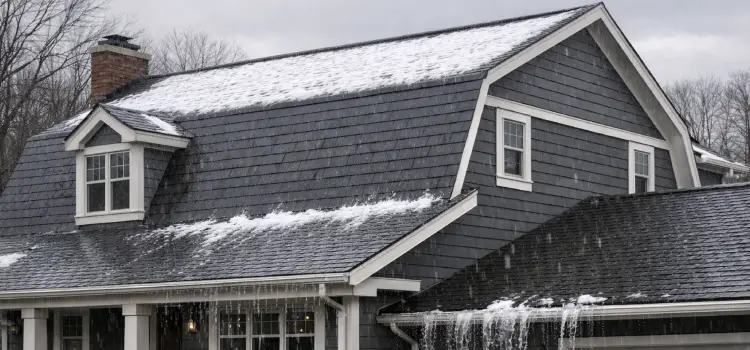
The basic idea is simple. The lower steep slope does a lot of the hard work. On a well-built gambrel roof, that steep slope sheds snow and rain quickly, which helps move water off the roof surface before it has much chance to sit and seep in. In practical terms, a steep slope sheds snow and rain better than flatter roof sections on many other roof types. That can be a real advantage for homeowners in Illinois who want a dependable roof design that does not invite standing water.
During Illinois winters, the lower sections of a gambrel roof can also help reduce accumulation in the areas people see first. In many cases, that steeper section prevents snow buildup on roof surfaces near the eaves and lower edges. That does not mean every part of the roof behaves the same way, though. The upper portion, with its shallower angle, may hold snow longer. That difference in slope behavior is important, especially when discussing maintenance, snow load, and long-term performance.
When built properly, this roof design can also reduce some moisture-related concerns. A gambrel roof may lower the risk of leaks and water damage when the details are right, especially at transitions, underlayment layers, and flashing points. The reality in Illinois is simple: the shape itself helps, but workmanship is just as important. Valleys, dormers, and every change in slope need careful detailing if a gambrel roof is going to stay solid through freeze-thaw cycles and wind-driven rain.
That helps explain why this roof style can be suitable for heavy rainfall, but not automatically. A gambrel roof can perform very well in Illinois weather, yet only when the assembly is built with durable materials, thoughtful drainage planning, and dependable installation at every break in the roofline.
Gambrel Roof Cost, Construction Complexity, and Material Choices
From a distance, a gambrel roof can look complicated. In practice, it often lands somewhere in the middle. Compared with some highly complex rooflines, it can be a versatile, cost-effective roof style. That is one reason the design appeals to some homeowners. The overall dual-slope design can sometimes reduce certain framing spans, which may help with labor and material use depending on the building layout.
That’s where the cost of building a gambrel roof gets more nuanced. A homeowner may hear that this is a simpler roof to frame than some multi-hip or heavily cut-up roof designs, and there is some truth in that. In the right project, simple gambrel roof construction can be efficient because the roof creates useful interior room without making the entire building significantly taller.
But broad labels can be misleading. A gambrel roof may be simple in concept, yet fussy in execution. The break between the upper and lower slope needs careful attention. Roof edges, dormers, and penetrations also raise the difficulty level. Even a well-designed roof only performs as well as the crew that installs it. In Illinois, where water, snow, and wind test every weak point, those details are not optional.
The roof covering also changes the equation. Common gambrel roof materials include asphalt shingles, metal, and, in some cases, wood shingles for a more traditional look. Each material affects cost, appearance, maintenance, and durability. Add multiple dormers, extra vents, or unusual transitions, and the final price can move more than the word “gambrel” suggests on its own.
Why Gambrel Roofs Offer More Usable Space and Curb Appeal
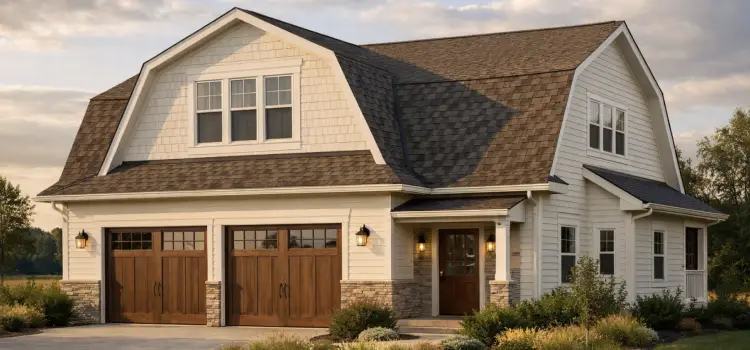
A big part of this roof style’s lasting appeal is that it is both functional and attractive. Dormers and windows are common on gambrel roofs for a reason. The shape makes it easier to add windows and dormers that bring in daylight, improve ventilation, and make upper-level rooms feel like true living space instead of leftover attic corners.
This flexibility is one of the most practical advantages of a gambrel roof. A homeowner can create a loft, a bedroom, a quiet office, or expanded storage while still keeping the building’s exterior balanced and attractive. That same flexibility is one reason the classic Dutch Colonial gambrel roof remains such a recognizable American design. It offers classic charm, a traditional look, and distinctive curb appeal without feeling overly decorative.
The visual character can shift depending on the home. Some gambrel roof designs lean rustic and barn-inspired. Others feel more refined, distinctly colonial, and timeless. Among the different gambrel roof styles, some include prominent dormers, some feature clean, uninterrupted slopes, and some use flared eaves for added architectural character.
There is one practical tradeoff, though. Beautiful dormers and added windows also create extra flashing points and additional transitions in the roof system. That can improve the look and function of the home, but it also adds complexity. Like most things in roofing, better design can be well worth it. It just needs to be built with care.
Drawbacks and Risk Factors: Wind, Snow Loads, and Leak-Prone Junctions
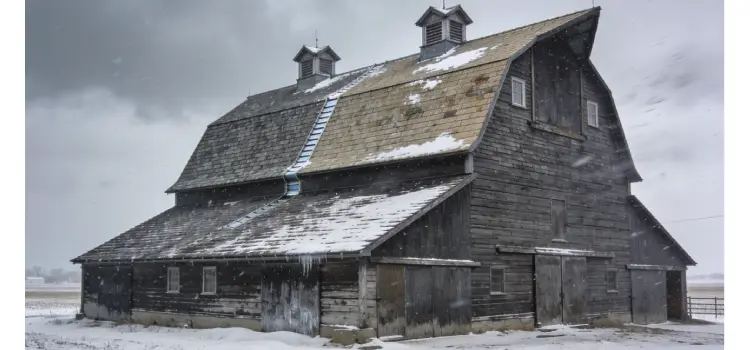
A gambrel roof has real strengths, but it also comes with a few practical tradeoffs. The biggest one is its vulnerability to wind. Compared with a hipped roof, a gambrel roof is generally more susceptible to strong wind because the lower steep slope can catch pressure more directly. In exposed parts of Illinois, that roof geometry deserves careful attention, especially on older homes, barns, and outbuildings where the original design may not match modern fastening standards.
That does not make the roof a poor choice. It just means the design has to be built and maintained carefully. Strong fastening patterns, sound roof decking, and structural reinforcement can all help a gambrel roof hold up better in wind-prone areas. Good workmanship becomes even more important when the roof design includes dormers, wider overhangs, or aging roofing materials.
Snow is the next concern. A gambrel roof can move snow well on the lower sections, but the upper shallow slope may still allow accumulation during a heavy Illinois winter. That is one reason snow load limits come up in discussions of this roof style. The design can be very effective, but the slope relationship matters. When snow lingers on the upper section, the roof may need reinforcement, careful monitoring, and in some cases safe snow removal when conditions demand it.
There is also a maintenance issue that homeowners sometimes underestimate. Maintenance and inspections are especially important for gambrel roofs because this roof has more than one slope, and every change in angle creates a potential trouble spot. The most obvious risk area is the break between the upper and lower sections. Those are the areas where leaks often develop if the flashing, underlayment, or shingle layout starts to fail.
Put plainly, a gambrel roof can be prone to leaks at its junctions. That does not mean every gambrel roof leaks. It means regular inspections are a sensible part of ownership, especially after Illinois freeze-thaw cycles, hail, and wind-driven rain. A dependable roof design still needs dependable upkeep.
A gambrel roof can be a smart choice in Illinois, but its performance depends on how well the space-saving design is balanced against wind exposure, snow behavior, and flashing detail.
| Gambrel Roof Feature | Main Advantage | Main Risk / Limitation | Why It Matters in Illinois |
|---|---|---|---|
| Dual-slope shape | Creates more usable attic or loft space | Slope transition adds detailing complexity | More interior room, but more care needed at junctions |
| Steep lower slope | Sheds rain and snow quickly | Can catch wind pressure more directly | Helps drainage, but wind detailing matters |
| Shallow upper slope | Keeps overall roof height balanced | Can hold snow longer in winter | Snow load and monitoring may become more important |
| Vertical gable ends | Defines the classic gambrel look | Less wind-resistant than a hipped roof | Exposed ends need strong fastening and sound decking |
| Dormers and added windows | Bring in daylight and improve usable living space | Add flashing points and leak risk | Better function and curb appeal, but more maintenance-sensitive |
| Material flexibility | Works with asphalt, metal, and some wood products | Performance depends heavily on installation quality | Product choice affects durability, upkeep, and cost |
| Barn-style / Dutch Colonial look | Strong curb appeal and recognizable character | Not automatically simple to build well | Good visual appeal, but execution still decides performance |
| Efficient interior volume | Adds headroom without making the house look too tall | Not all structures or layouts benefit equally | Useful for one-and-a-half-story homes, garages, and outbuildings |
Why Gambrel Roofs Remain Popular
Most people know this shape first as a barn-style gambrel roof. In everyday language, many homeowners simply call it a barn roof, and that makes sense. The form became popular because it created more usable interior space and storage without forcing the whole building to become unusually tall. That practical design worked well for hay lofts, attic storage, and upper-floor rooms.
Today, gambrel roofs still show up on several types of buildings. They are common on homes, barns, sheds, garages, and other outbuildings. They also make sense on one-story and one-and-a-half-story buildings where the extra attic or loft area becomes bonus living space. That helps explain why gambrel roofs still appeal to homeowners who want both character and function.
It remains one of the most recognizable roof forms in American residential design. Some people even connect its dramatic shape to pop culture through The Amityville Horror. Still, for most homeowners in Illinois, the appeal is practical rather than cinematic: extra space, distinctive curb appeal, and a classic roof silhouette that stands out for the right reasons.
If your home has a gambrel roof, it is worth scheduling an inspection that focuses on the slope transition, dormer and valley flashing, ice-and-water protection, and wind detailing. On gambrel roofs in Illinois, those are the areas that often decide whether the roof lasts for decades or starts leaking early.
Frequently Asked Questions
What makes a gambrel roof easy to recognize?
A gambrel roof is a type of roof with a distinctive outline. It is a two-sided roof with two slopes on each side rather than one continuous plane. The upper slope is shallower, while the lower slope is steeper. Viewed from the side, that shape creates a familiar profile associated with traditional roof design and practical upper-level space.
Why is the gambrel shape so closely associated with barns?
The association with barns comes from function, not just appearance. Farmers used this architectural style because the form created extra loft room for hay and equipment without making the structure excessively tall. That same layout still works well for garages, sheds, and homes. In many ways, it was a practical roofing solution before it became a design statement. The shape offered real storage value, which is why it remains tied to farmhouse and agricultural building traditions.
What are the main benefits of gambrel roofs for homeowners?
The biggest benefits of gambrel roofs are extra headroom, better upper-level usability, and strong visual character. These are practical benefits, not just aesthetic ones. The shape can make room for a loft, storage, or finished living area while keeping the overall mass of the house more balanced. For homeowners who want efficient use of space without a complicated roof layout, a gambrel can offer a smart middle ground between function, appearance, and long-term value.
Are there different types of gambrel roofs?
Yes, there are several types of gambrel roofs, even though the basic profile stays consistent. Some have clean, uninterrupted roof planes, while others use dormers, flared eaves, or a more refined, classic look. Certain versions lean rustic and look right at home on a farmhouse, while others suit Colonial-style homes with more formal lines. In U.S. neighborhoods, the most familiar examples often appear on Dutch Colonial homes, where the shape supports both charm and everyday function.
When does roof replacement make sense for a gambrel roof?
Roof replacement usually makes sense when leaks, storm damage, aging materials, or repeated repair issues start affecting reliability. With this roof shape, special attention should go to the change in pitch, because the lower slope of a gambrel roof and the transition above it can become weak points over time. Homeowners dealing with repeated repairs or widespread wear can review roof replacement pricing to get a clearer starting point before deciding whether another repair or a full replacement is the better move. A qualified roofing contractor should inspect the flashing, decking, and underlayment before recommending full replacement. In some cases, the shape itself is fine, but the aging roof system is no longer dependable.
What are the benefits of a gambrel roof inside the home?
One of the clearest benefits of a gambrel roof is the amount of usable room it creates beneath the framing. Because the lower section pushes outward, upper floors often feel less cramped and better suited for bedrooms, offices, or storage. That can improve both home design and daily comfort. It also gives owners added flexibility to fit the roof shape to the home’s design, especially when they want practical square footage without dramatically increasing the building’s apparent height.
What materials for gambrel roofs work best in Illinois?
The best materials for gambrel roofs depend on budget, appearance goals, and weather exposure. Common materials for gambrel roofs include asphalt shingles, metal panels, and sometimes wood shingles or shakes for a traditional look. Each option affects maintenance, cost, and durability differently. Because the profile has transitions and exposed edges, installing a gambrel roof calls for careful detailing regardless of product choice. The right material should fit both the climate and the structure’s overall roof geometry.



Tony and Judy Lavarda, Napervile, IL

The team worked efficiently, stayed responsive to phone calls, and were always professional, friendly, and positive. They came highly recommended and truly delivered. We continue to refer them to our friends and neighbors as well.


I highly recommend Boxer Exteriors


Great customer service. Dawn and her team went above and beyond. I highly recommend!!!!!💪🏻💪🏻